








ZODIAK ONLINE
ArtBridge House, Area 47
Sect. 5, P/Bag 312
Lilongwe, Malawi
Sect. 5, P/Bag 312
Lilongwe, Malawi

It is 7 o'clock in the morning in the hard-to-reach hills of Traditional Authority Mbawera, more than 50 kilometres south of Thyolo Boma.
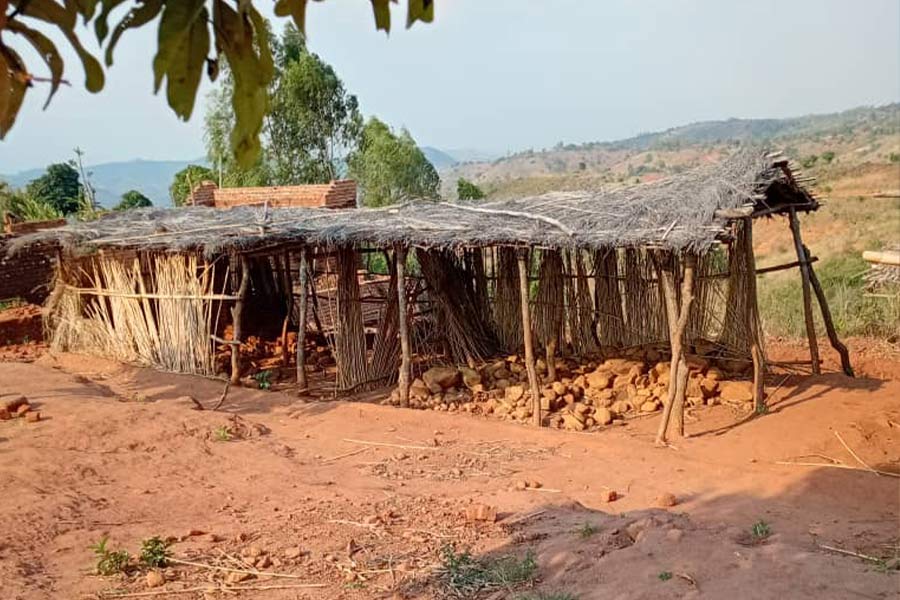
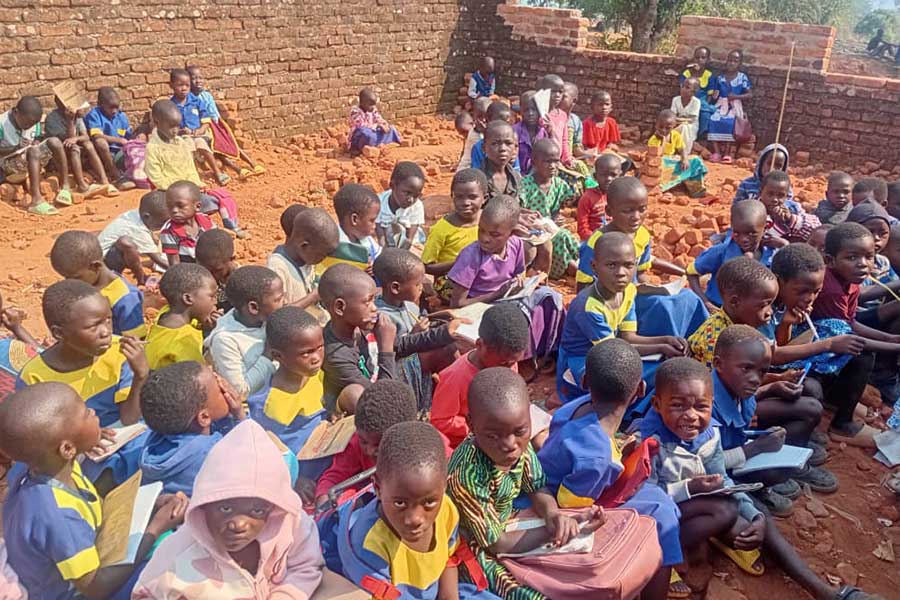
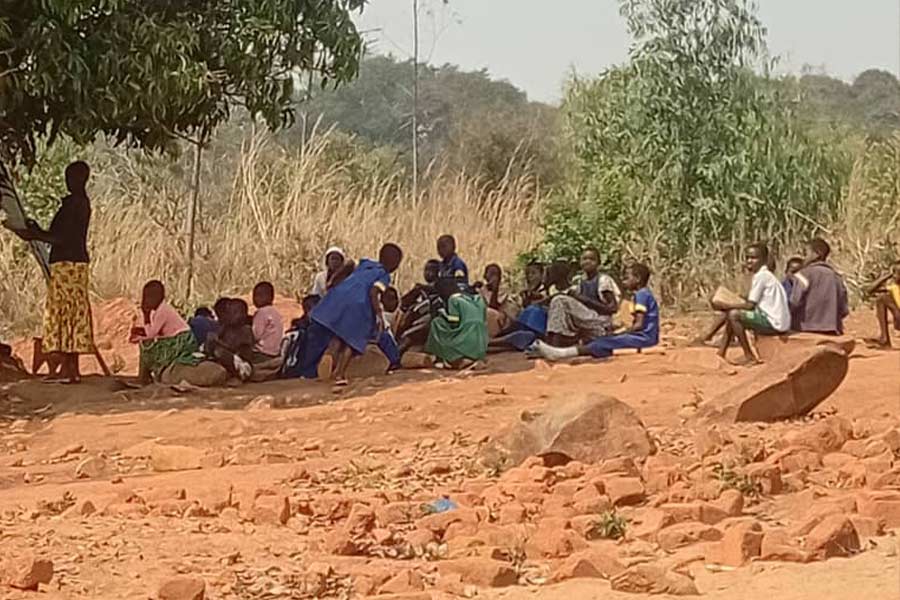
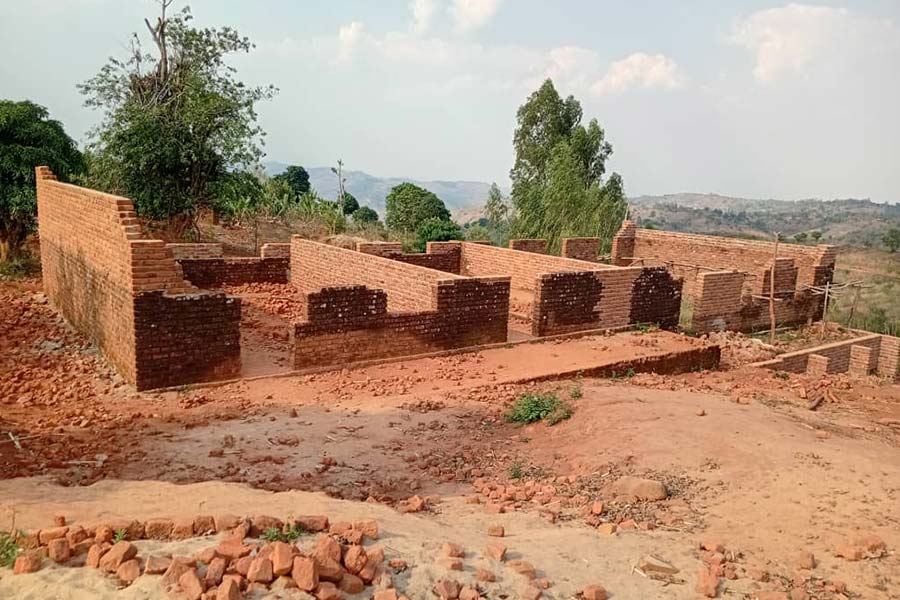
Beneath sagging, leaking grass-thatched shelters, cold winds sweep through. Nearly 300 children in torn and dusty uniforms sit shoulder to shoulder on the bare ground. Their desks are stones. Their classrooms are trees and an unfinished brick structure.
This is Nyenyedi Community-Led Primary School.
Not built by government. Built by a community determined to give its children a chance.
Parents established the school in 2019 after watching their children walk between five and seven kilometres every day to Kodzaalendo, Mabuwa and Milole primary schools. For many learners, the journey was too much. Some dropped out. Some girls entered early marriages.
"We started this school in 2019 because our children were suffering. Imagine six-year-old walking seven kilometres every morning to Kodzaalendo and crossing rivers on the way. Many simply gave up," says steering committee member George Hanania.
Hanania says the community has refused to surrender its children's future despite overwhelming challenges.
"With help from our brothers and sisters in South Africa, we are moulding bricks with our own hands. We are poor, but we refuse to let our children's future be buried. We do not want our struggles to define their future," he says.
Despite lacking official recognition, community leaders say education officials occasionally visit the school and provide limited teaching materials.
Years of Appeals, Little Action
Village Head Berasoni says the community has approached Members of Parliament and government authorities for years, but without success.
"For years we have been lobbying and pleading for assistance. We feel abandoned. But how can we stand by and watch our children stop going to school?" she asks as learners scramble for space beneath the fragile shelters.
Faced with inaction, villagers took matters into their own hands.
Every household contributes towards paying four untrained volunteer teachers, young men and women from the village who have become the community's only educational lifeline.
The burden is heavy.
Parent Mary Biton from Wayizi Village says families struggle to keep the school running.
"I salute these volunteer teachers because they are trying their best. My child is learning to read. But it breaks our hearts to see children learning under such conditions. Every month we must contribute K1,000 per child. Sometimes families fail to raise the money because life in the village is hard. When that happens, children stay home," she says.
"We are ready to mould all the bricks ourselves if government or well-wishers can help us with cement and iron sheets."
Learning at the Mercy of the Weather
For Standard Four learner Goodluck Andson, school is a daily battle against both rain and heat.
"When it rains, water pours onto our books and lessons stop. If it rains for a week, we lose a week of learning. When it is hot, we sit under trees and suffer from the heat. We are asking authorities to build proper classrooms and drill at least one borehole. We want to learn like other children in this district," he says.
Volunteer headteacher Davie Wizimani believes the school reflects the inequalities facing many rural learners.
"We have nearly 300 learners, no borehole and no proper toilets. We borrow chalk, blackboards and textbooks from neighbouring schools. What pains me most is that when learners complete Standard Four here, I must take their results to another school for certification because we are not fully recognised," he says.
'A Campaign Ground for Promises'
Steering Committee Chairperson Joseph Jaba says politicians regularly visit the school during campaign periods but rarely return after elections.
"This school has become a campaign ground. Every election season, politicians come here, make promises, pose for photographs under these shelters and disappear. Not even a single tambala of public money has reached us," he says.
Jaba says one former parliamentarian helped construct the foundation of a classroom block before abandoning the project.
"Others came during campaigns, but once the elections were over, so was their interest."
For Joyce Manuel, 16, of Wayizi Village, the lack of proper learning conditions contributed to her decision to leave school.
She describes the environment as discouraging and says marriage appeared to be the only option. Today, she is a mother of one.
Manuel now appeals to authorities to improve infrastructure and learning resources so that other children do not follow the same path.
Conflicting Accounts Over Responsibility
Thyolo-Thekerani Member of Parliament Mavuto Sandram Scott disputes suggestions that the community has been abandoned.
According to Scott, the school first operated in 1994 with government teachers but closed after local disputes led to their redeployment.
"I advised the community to wait for Constituency Development Fund (CDF) resources to facilitate classroom and sanitation infrastructure. Those funds are now available," he says.
However, Thyolo District Commissioner Noel Dakamau says the district does not formally recognise Nyenyedi School, claiming enrolment is below 50 learners, while conceding that the area requires a public school.
Dakamau confirmed that the Constituency Development Committee did not prioritise Nyenyedi in the 2026/27 CDF allocation, opting instead to fund Community Day Secondary Schools, a market and other projects.
Chairperson of Thyolo Civil Society Organisations, Dalitso Chiwayula, describes the situation as unacceptable.
"It is unfortunate that such conditions still exist. The lack of proper school infrastructure is not only affecting T/A Mbawera. Similar challenges exist across the district. Government must move beyond rhetoric and prioritise education," he says.
Chiwayula argues that investment in education is essential for community development.
"Someone is clearly sleeping on the job. We will continue pursuing this matter. When the council budget was scrutinised this year, education was not treated as a priority."
Experts Call for Sustainable Solutions
Education expert Wesley Mwambakulu says the community and school management committee must openly address the disputes that led to the closure of the original school while authorities simultaneously address the current crisis.
"The community must first resolve what caused the previous school to close. At the same time, government must urgently provide infrastructure because weather conditions are severely disrupting learning. The MP has a responsibility to help mobilise resources instead of leaving the burden entirely to the community," he says.
Mwambakulu also stresses the need for qualified teachers to ensure quality education.
Minister of Education Bright Msaka says government policy requires children to have reasonable access to schools, with five kilometres regarded as the maximum acceptable walking distance.
"If funds are available, then the solution is within reach. Once the school infrastructure is completed and meets safety standards, government will deploy teachers. Our policy does not permit deployment to facilities that do not meet the health and safety requirements of learners and teachers," he says.
The Same Story in Dedza
More than 200 kilometres away in Dedza, a similar picture emerges.
At Nyama II Primary School under Senior Chief Kasumbu, over 300 learners attend classes, with some learning in grass-thatched structures built by parents.
Education expert Island Mtambo says it is shameful that children are still learning in such conditions more than six decades after Malawi attained independence.
"It is unfortunate that children are still learning under trees and temporary shelters. What is encouraging is that communities clearly value education. Parents can continue supporting through activities such as moulding bricks and sourcing construction materials, but government and elected leaders must also fulfil their responsibilities," he says.
School Management Committee Chairperson Anne Costantino says classroom shortages remain acute.
"We have four classroom blocks. Another structure, intended to be an office block, remains incomplete and learners are using it as classroom space. We have repeatedly sought assistance, but nothing has materialised," she says.
Malawi Vision 2063 envisions an education system that is inclusive, accessible and of high quality. The strategy commits to removing both financial and geographical barriers to education and strengthening human capital development.
The Malawi Education Reform Programme (MERP) promised thousands of permanent classrooms and improved sanitation facilities to reduce overcrowding.
The National Education Policy calls for equitable deployment of qualified teachers and quality learning environments for every child, regardless of location.
Malawi is also committed to Sustainable Development Goal 4, which seeks to ensure inclusive, equitable and quality education for all.
Yet in Nyenyedi and Nyama II, those commitments remain distant promises.
A Simple Question
Nearly 300 children in Thyolo sit on stones.
They learn beneath trees and leaking shelters.
Their parents mould bricks. They contribute money for teachers. They refuse to let poverty, distance and early marriages rob their children of an education.
The community has done its part.
The question now is whether the government will do its own.