





ZODIAK ONLINE
ArtBridge House, Area 47
Sect. 5, P/Bag 312
Lilongwe, Malawi
Sect. 5, P/Bag 312
Lilongwe, Malawi

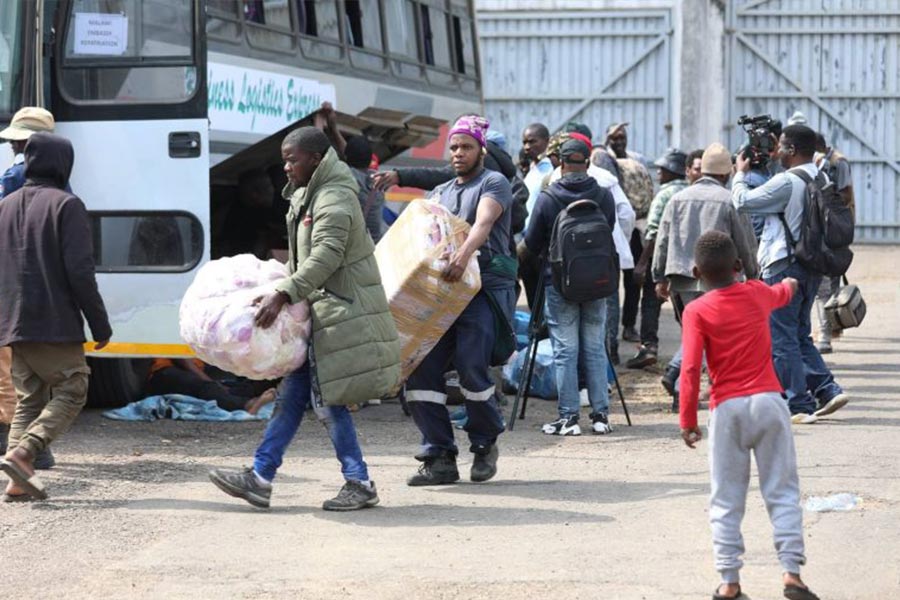
For years, South Africa represented hope for thousands of Malawians searching for jobs and a better future. It was the land where dreams were expected to come true, where hard work promised a decent income, and where families left behind anticipated a better life.
The labour migration dates back from 1900s through the Witwatersrand Native Labour Association (WENERA), an organization established to recruit men from Malawi and across Southern Africa to work in South African gold mines.
Others went through the Employment Bureau of Africa (THEBA) in 1970s where people were formally employed. Historically, this was the primary recruiting agency for South Africa's mining industry. Established in 1977 by combining previous mining labour organizations, it was responsible for sourcing, screening, and transporting hundreds of thousands of migrant workers from across Southern Africa.
It was official. Governments knew everything. There were papers signed. It was lucrative and rewarding deal.
But now for many undocumented migrants, the dream has increasingly become a nightmare.
As thousands of Malawians return home after fleeing resurfaced anti-immigrant violence, many arrive with nothing but the clothes they are wearing, carrying heartbreaking stories of displacement, loss and shattered ambitions.
Yet, on a quiet hillside in Thyolo district, another story unfolds, one that offers hope amid despair.
At first glance, the four fish ponds perched on a steep slope in Njale Village under Sub-Traditional Authority Mulenga seem almost impossible. Carefully engineered into the hillside, the ponds appear to hang above the ground, defying the terrain that many would consider unsuitable for aquaculture.
Surrounded by banana plants, fruit trees and other vegetation that anchor the soil while providing food and additional income, the ponds are more than a farming enterprise. They are a symbol of resilience.
Their owner, 42-year-old Pascal Chikopa, once chased the same dream that has drawn generations of Malawians to South Africa.
Today, he earns approximately K36 million annually from fish farming through the sale of fingerlings and harvested fish, proving that prosperity can also be found at home.
"I used to travel frequently to South Africa before 2006. Life was good there and my white employer treated me well, but I realised something was missing," Chikopa recalls.
"I lacked peace. In a foreign country, you cannot live as freely as you do in your own. If someone wrongs you, it is difficult to seek justice. That made me appreciate the freedom we have in Malawi."
Although his employer valued his work, Chikopa says he constantly felt like an outsider.
The uncertainty of life as a foreign national convinced him that financial gain alone could never replace the security and dignity of living in one's own country.
While working in South Africa, Chikopa heard stories of Malawian fish farmers who were transforming their lives back home. Those stories planted a seed in his mind.
"In 2007, I decided to return to Malawi with some savings and invest in fish farming," he says.
The beginning was anything but easy.
There were moments when the business appeared destined to fail. Discouraged by slow progress, Chikopa considered returning to South Africa.
Instead, district agricultural extension officers encouraged him to persevere.
He listened.
Nearly two decades later, that decision has transformed his life.
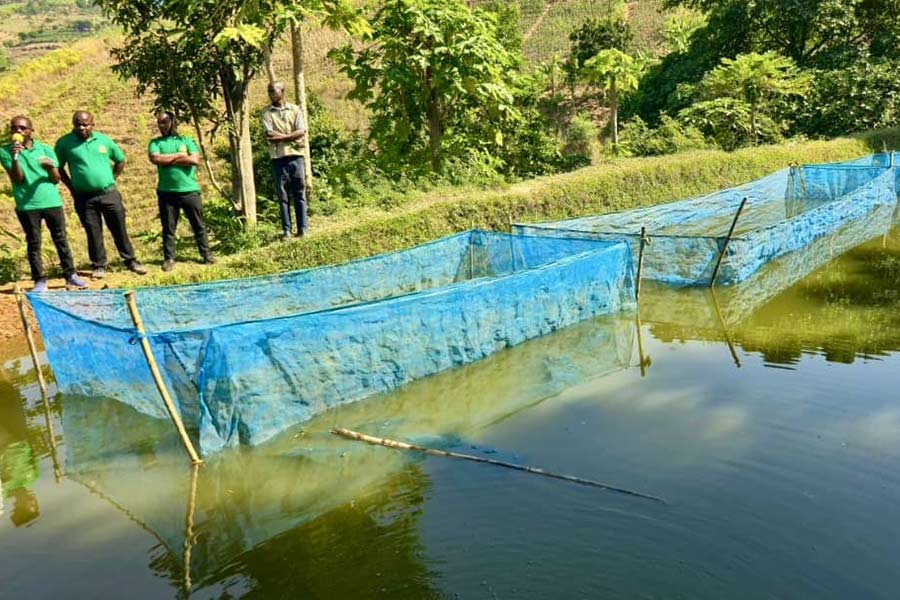
Each of his three ponds generates around K6 million annually from fingerling sales alone, with fish harvests bringing in substantially more. He has now constructed a fourth one.
The income has enabled him to educate his children, including one who has graduated with a university degree.
"I am financially independent," he says with quiet pride. We never struggle to find customers. Whenever we harvest, buyers come here and everything is sold."
His success has also changed the landscape around his home.
The fruit trees, bananas and vegetation surrounding the ponds help prevent soil erosion while providing food for his household and creating a sustainable farming ecosystem.
His next dream is to acquire a lorry to improve transportation for his expanding enterprise, a goal he hopes can be achieved with support from development partners.
Looking back, Chikopa has no regrets about abandoning migrant life.
"I want to encourage my fellow Malawians returning from South Africa to think carefully about their future and invest here at home," he implores.
He adds, "I am proof that you can earn the same money in Malawi. In South Africa I was always living in fear—of the police and sometimes even ordinary citizens. East or west, home is best."
His message comes at a time when thousands of Malawians are returning home after Xenophobia forced them to flee the country.
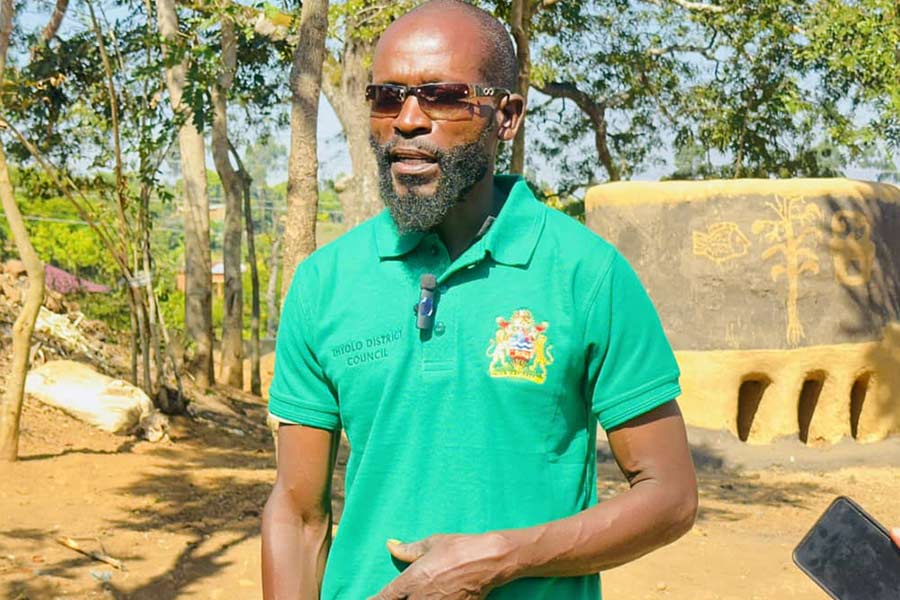
Chikopa's enterprise goes beyond the ponds. It tackles climate change and soil conservation.
Thyolo Chief Agriculture Officer Prince Shaibu, attested Chikopa's gains. He has urged other communities to embrace the Integrated Conservation Management and Irrigation (ICM) approach, saying it has helped improve food security and people’s livelihoods.
According to Shaibu, the initiative is reclaiming degraded areas and boost various smart farming including irrigation in the district.
So far the district has conserved 33,000 hectares of trees, avoided soil erosion, and put 3,400 hectares under irrigation.
District Council Chairperson Councillor George Jailos said the farmers needing support will be considered in the reformed Constituency Development Fund (CDF).
According to the Malawi Government, 41,976 Malawians were repatriated from 7 June to 12 July 2026 after they faced attacks targeting foreign nationals. These included about five people that died along the way back.
Many returned with nothing after losing their homes, businesses and possessions.
Some reported being given only minutes by landlords to vacate rented accommodation as tensions escalated. Others slept at the camps and outside the Malawian Embassy in Pretoria for days while waiting for assistance.
For 28-year-old Elita John from Ntaja in Machinga district, the journey home was one of unimaginable trauma.
Three years earlier, she and her husband had travelled to South Africa determined to save enough money to establish a business in Malawi.
Instead, violence under the banner "March and March" destroyed everything they had built.
"It felt like I was dreaming," she recalls while holding her one-month-old baby.
Our landlord suddenly told us to leave because foreigners had become targets."
She remembers groups of young men attacking foreign nationals in Mossel Bay in the Western Cape, setting homes ablaze as terrified families fled.
"I saw houses belonging to foreigners burning to ashes. People were running in every direction. I had no choice but to run to save my life and my baby's."
For three days, she survived in nearby bushes without food or water, clutching her infant while hiding from the violence.
The ordeal separated her from her husband. To this day, she does not know whether he is alive.
Another returnee, Osman Malithano, says his three years in South Africa left him financially ruined and emotionally disturbed.
Stories like theirs have prompted the Malawi Government to suspend travel by returnees back to South Africa while repatriation efforts continue.
The Department of Immigration and Citizenship Services has stressed that this far no Malawian has returned to South Africa after government issued a restriction and commenced repatriation of its citizens facing attacks in the Rainbow nation.
Department Spokesperson Pasqully said that people are no longer going to RSA with the current chaotic scenes and repatriation buses are returning empty.
"None has returned to South Africa and upon repatriation exercise, buses are going back empty," he assured.
Social commentator Caesar Kondowe lauded government for restriction order and believes returning home should mark the beginning of rebuilding, not another cycle of hardship.
He has called on government to include returnees in Malawi Enterprise Development Fund (MEDF) loan facilities and social protection programmes such as the Social Cash Transfer Programme to help them regain their footing.
"We have seen that most of them have come back empty-handed after losing everything. I would like therefore ask the government to help them with loans and Mtukula Pakhomo for them to be settled," he implores.
According Department of Disaster and Management Affairs (DoDMA) commissioner, Wilson Moleni, the government requires K24 billion to repatriate all Malawians facing threat.
Meanwhile, in Thyolo, Chikopa continues feeding his fish, harvesting fingerlings and welcoming customers who travel to his farm.
His ponds stand as a quiet reminder that success does not always lie beyond Malawi's borders.
Sometimes it is found on a steep hillside that others overlooked. Sometimes it begins with the courage to come home.
And for the thousands of Malawians returning with broken dreams, Pascal Chikopa's journey offers something more valuable than financial advice.
It offers proof that hope, when nurtured with determination, patience and hard work, can flourish in the very soil they once left behind.