






ZODIAK ONLINE
ArtBridge House, Area 47
Sect. 5, P/Bag 312
Lilongwe, Malawi
Sect. 5, P/Bag 312
Lilongwe, Malawi

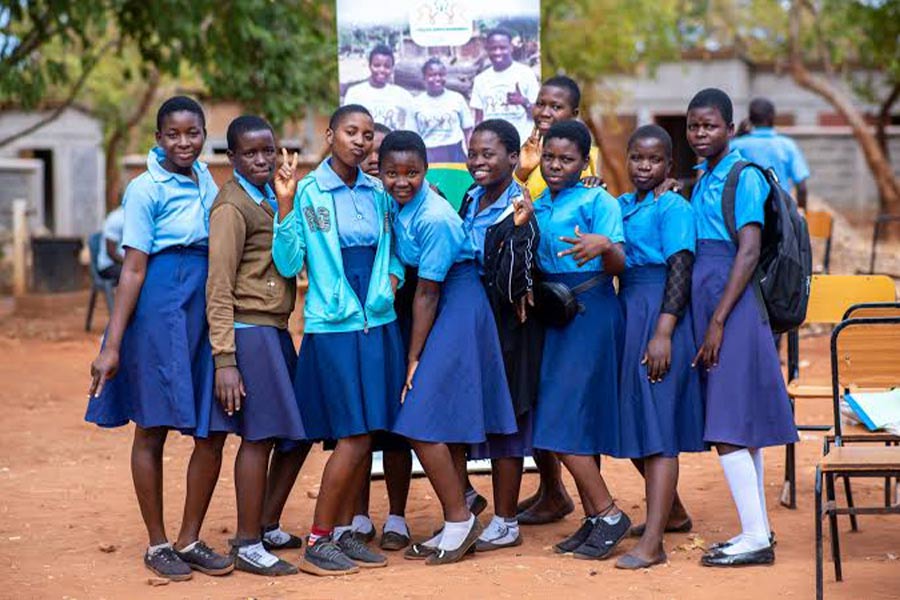
ACCRA, Ghana – Malawi's efforts to expand access to secondary education have been highlighted in a major new continental report that warns African countries must urgently transform their education systems to prepare millions of young people for work, entrepreneurship and lifelong learning.
The report, Secondary Education in Africa: Expanding Pathways to Work, Livelihoods, and Lifelong Learning, launched by the Mastercard Foundation in Accra, Ghana, identifies Malawi as one of seven countries selected for in-depth case studies examining what works and what remains challenging in expanding secondary education.
The spotlight on Malawi comes as the country continues implementing fee-free secondary education reforms. In January 2026, the government abolished School Development Fund contributions and Malawi National Examinations Board examination fees in public secondary schools, building on the removal of tuition fees in 2018.
The report describes fee-free secondary education as one of Africa's most significant education reforms.
Despite the reforms, researchers found that significant barriers remain. Ministry of Education data cited in the report show that the transition rate from primary to public secondary school rose from 37 percent in 2021 to 43 percent in 2022, meaning fewer than half of primary school learners continue into public secondary education.
The report argues that while removing fees opens the door to secondary education, it does not guarantee attendance or completion. In Malawi, families continue to face hidden costs including transport, uniforms, meals, learning materials and boarding expenses. Many learners also live more than five kilometres from the nearest secondary school, while social and cultural barriers continue to affect school participation among some girls.
Researchers point to evidence-based interventions that could help address these challenges, including targeted cash transfers, bursaries, school feeding programmes, social protection initiatives and capitation grants directed toward the poorest schools and communities.
The report says these measures are most effective when combined with efforts to improve safety, health and gender inclusion.
The findings come against the backdrop of a rapidly growing youth population across the continent. More than 330 million young people in Sub-Saharan Africa are expected to reach working age by 2035, while only about three million formal jobs are projected to be created annually.
While secondary school enrolment across Africa increased from 95 million learners in 2020 to more than 110 million in 2024, an estimated 77 million secondary school-age children remain out of school.
The report warns that education systems are running on a "demographic treadmill", with population growth accounting for most recent enrolment gains.
Mastercard Foundation President and CEO Sewit Ahderom said secondary education represents the last opportunity for many governments to prepare young people for productive livelihoods.
"Education for today's young people, especially at the secondary level, must lead somewhere. For most young Africans, secondary school is the last time a system reaches them at scale," she said.
The report argues that schools must move beyond preparing students solely for university or formal employment and instead equip them for multiple pathways, including entrepreneurship, self-employment, digital work, green jobs and creative industries.
Across Africa, nearly 90 percent of youth employment remains informal, underscoring the need for education systems that prepare learners for a wider range of economic opportunities.
Researchers also warn that Africa's education financing challenge is growing. Only 22 of 42 African countries with available data meet recommended education spending levels, while debt servicing exceeds education expenditure in 18 countries. These constraints threaten efforts to improve both access and quality in secondary education.
Drawing on studies from Malawi, Ethiopia, Ghana, Rwanda, Senegal, Sierra Leone and Tanzania, the report calls for reforms in curriculum design, teacher development, technology use, skills training and school-to-work transitions to ensure young people are prepared for an evolving labour market.
The report has emphasized that expanding access through fee-free education is an important achievement, but lasting success will depend on addressing hidden costs, strengthening school infrastructure, supporting teachers and ensuring that learners, particularly girls and those in rural communities, can remain in school and transition into meaningful work and livelihoods.