















ZODIAK ONLINE
ArtBridge House, Area 47
Sect. 5, P/Bag 312
Lilongwe, Malawi
Sect. 5, P/Bag 312
Lilongwe, Malawi

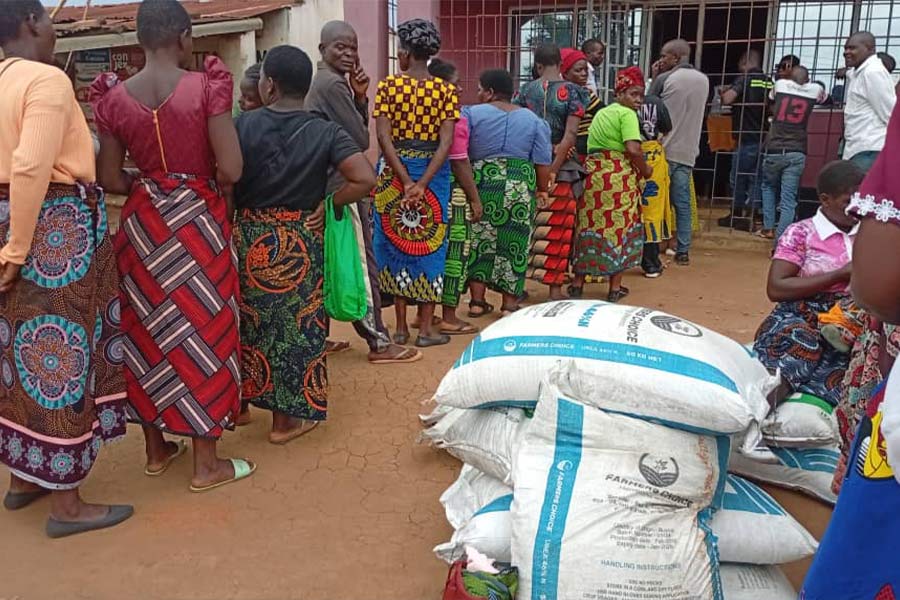
When Chrispine Moya, 68, (not his real name) from Matchuwana Village under Senior Chief Nchiramwera in Thyolo, heard last month that his wife and daughter had been enlisted to benefit from the rebranded Farm Inputs Subsidy Programme (FISP), he recalled the years when his family harvested over 30 bags of maize from just 0.2 hectares—enough to feed his household of six for a full year.
But that hope quickly dimmed at a meeting convened by district agriculture extension workers at the home of Village Headman Matchuwana, where he learned that each beneficiary’s two bags of fertiliser would be shared among eight other community members who were not on the official list. The workers also indicated that people would be buying the inputs in groups of 40.
“Back in the days, with that fertiliser, I could harvest not less than 30 bags of maize to feed my family of six for the whole year. But with this local arrangement of sharing the bags, it is as simple as planting hunger. What can 12.5 kg each do?” he lamented, urging the government to ensure households receive full packages as intended.
Another beneficiary, Thomas Paulo of the same village, echoed the concern. He said while the Smallholder Farmers Fertilizer Revolving Fund of Malawi (SFFRFM) selling points are operating, the quantities farmers receive after sharing are too small to support meaningful production.
“We were put in a group of 40 in our village to buy and share 10 bags of fertiliser. Much as the programme is good, the fertiliser is not enough. I would wish everyone was given at least two bags as it used to be in the past,” Paulo said.
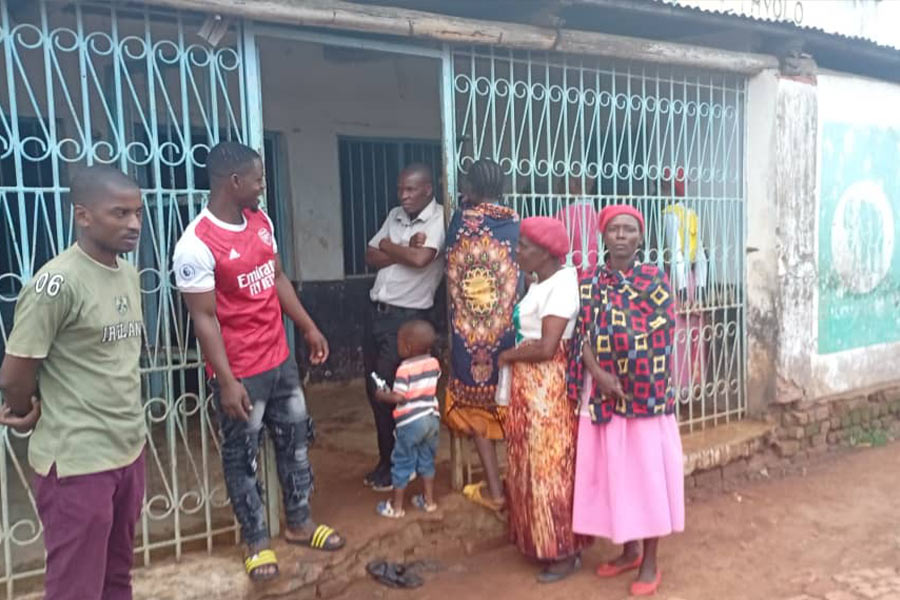
However, not everyone sees sharing as a mistake. Under Senior Chief Nchiramwera, Village Headman Mnangu praises the long-standing local tradition of dividing subsidised fertiliser and seed so that even those not listed can receive a little. To him, this is a symbol of unity.
“It shows love among us. We applauded the extension workers for grouping the people. We share the resources when they are inadequate,” Mnangu said.
At the District Council, however, the mood is more cautious. District Commissioner Hudson Kuphanga warns that the practice may be undermining the very purpose of FISP.
“We have really established that beneficiaries are sharing the inputs. The government's goal was that each beneficiary should cultivate at least 0.2 hectares, so they can harvest enough, up to 30 bags, to be food secure,” he explained.
But when inputs are shared, no one cultivates adequate land with enough fertiliser, lowering yields and increasing hunger risk.
Meanwhile, some villagers like Chrissy Andrea of Gumbi Village, Traditional Authority Nanseta, have praised this year’s inputs redemption system, describing it as “smooth.”
Still, to Chief Mnangu and others, sharing is not just a necessity, it is a moral choice. It is love.
This debate comes as Malawi faces worsening food insecurity. The Democratic Progressive Party (DPP)-led government has pegged this year’s FISP beneficiaries at 1.1 million.
Yet according to the 2025 Malawi Vulnerability Assessment Committee (MVAC) report, over four million Malawians, about 22 percent of the population, are projected to face acute food insecurity during the 2025/2026 lean season. Shockingly, 8,000 people are in IPC Phase 4 (emergency).
President Professor Peter Mutharika declared 28 districts food insecure.
The scale of the crisis is massive. Government estimates show that over 200,000 metric tonnes of maize will be needed for humanitarian assistance, valued at K387.2 billion. But the response remains underfunded, with a K148.2 billion gap that threatens assistance efforts even before the lean season peaks.
FISP was designed to boost yields, improve food security, and support vulnerable households. But when community practices reinterpret its purpose, the line between unity and unintended harm becomes blurred.
Chief Mnangu’s approach reflects strong social cohesion, a powerful force in rural Malawi where mutual aid has long sustained communities.
But as Kuphanga warns, when everyone dilutes their share, the fertiliser and seeds may not be enough to produce meaningful harvests—especially in a year when millions face hunger.
Ultimately, this is not just a story about fertiliser. It is about who gets to farm enough land, who can realistically grow enough food, and who eats.
Agriculture commentator Gresham Kamnyamata argues that Malawi is at a crossroads: scale up FISP, rethink it, move to a universal subsidy, or consider alternative food-security strategies.
“Research has already indicated that this programme is not sustainable, so it is up to the government to think through,” he said.
But at village level, leaders like Chief Mnangu are guided by moral obligation, not policy. “If someone has more, they should help those with less,” he insists.
Still, with national funding gaps and logistical challenges, goodwill alone cannot guarantee food security. The programme’s success requires resources, coordination, and trust.
The Thyolo experience could be a microcosm of Malawi’s broader challenge: reconciling community tradition with programme effectiveness.
Policymakers may need to strengthen community education on how FISP should operate, promote complementary support like micro-grants or training, and bridge funding gaps to ensure food assistance reaches those in need.
Ministry of Agriculture spokesperson Arnold Namaja says FISP beneficiary selection was conducted openly at community level, facilitated by agriculture structures, with frontline staff explaining the criteria and available slots. Beneficiaries were selected publicly to ensure transparency.
He adds that each household must receive a full package: one 50kg bag of NPK, one 50kg bag of Urea, and a 5kg cereal seed pack.
He stresses that the Ministry discourages sharing and is intensifying campaigns to promote proper utilisation for better yields.
“The Ministry does not encourage sharing of inputs. We are intensifying campaigns to stop the practice and ensure proper utilization for optimum productivity,” Namaja said.
But according to Executive Director of the Centre for Social Accountability and Transparency (CSAT), Willy Kambwandira, the situation shows that government is pushing a programme that cannot meaningfully address food insecurity.
“The government is merely trying to be seen to be doing something, but this will not change anything in terms of eradicating hunger. In the end, it will only fuel tensions among extension workers, chiefs, and community members,” he said.
In Thyolo, the act of dividing fertiliser is an expression of love. In Machinga—where people resorted to buffalo beans this year, the MVAC report signals urgent action.
For Malawi, the challenge is clear: how to channel this spirit of community compassion into outcomes that sustain crops, feed families, and uphold dignity.
Because in a country where nearly one in five people may lack food, compassion alone is not enough. It must be paired with purposeful policy, transparent support, and collective resolve.