








ZODIAK ONLINE
ArtBridge House, Area 47
Sect. 5, P/Bag 312
Lilongwe, Malawi
Sect. 5, P/Bag 312
Lilongwe, Malawi

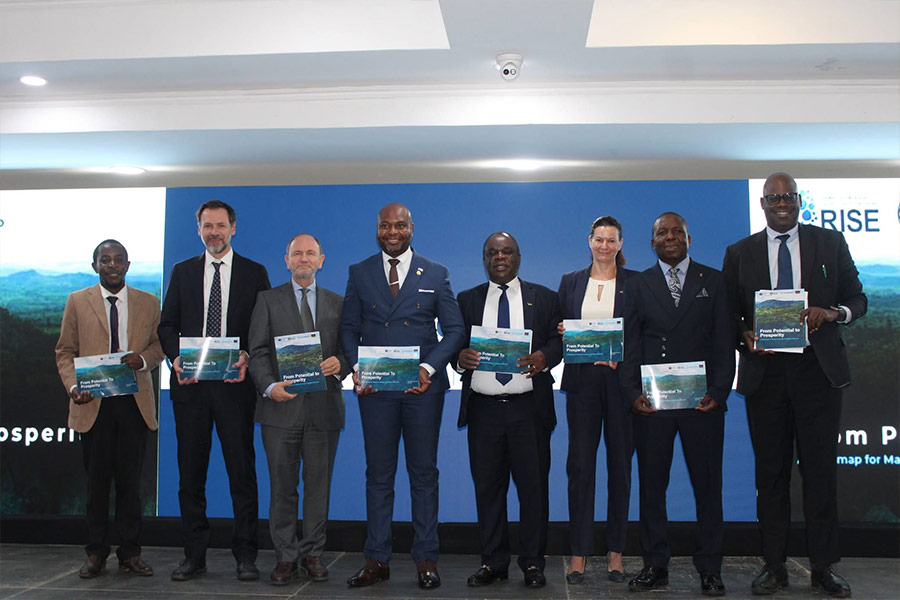
Malawi could generate more than US$30 billion in mining exports between 2026 and 2040 under a new roadmap launched by the government and the World Bank.
The roadmap, From Potential to Prosperity: Malawi’s Energy Transition Minerals, identifies projects including Kayelekera uranium, Kasiya rutile and rare earth deposits as potential drivers of a major expansion of the mining sector.
However, it warns that achieving the projected gains will depend on addressing constraints in electricity supply, regulation, infrastructure, foreign exchange and the wider investment environment.
Launching the roadmap on Tuesday, September 23, 2026, Minister of Mining Thoko Tembo said the government would adopt a coordinated approach involving several ministries to create a more predictable environment for investors.
The ministry plans to prepare a Cabinet paper and work with the ministries responsible for energy, finance, natural resources and transport to coordinate implementation.
“As a sector, we're still at the potential stage. So, for us to unleash that potential, we need to make sure that we've got transparent regulations, we need to make sure that we've got a sound legal system and sound legislation,” Tembo said.
Electricity is among the biggest challenges. The roadmap estimates that mining operations could require about 120 megawatts of additional power by 2032, putting further pressure on Malawi’s constrained electricity system.
World Bank Division Director Firas Raad said the Bank was supporting energy investments that could help meet the sector’s infrastructure needs, including the Mpatamanga project, the Malawi-Mozambique interconnector and the ASCENT programme.
He said unlocking Malawi’s mining potential would require investment in infrastructure, skills, policy and regulation, alongside private capital.
“It can't just be the Ministry of Mining. It must be all ministries and all government pulling in the same direction,” Raad said.
The roadmap also highlights foreign-exchange shortages, exchange-rate distortions, lengthy permitting processes, uncertainty over government participation and inconsistent fiscal policies as potential investment deterrents.
Transport remains another challenge, with the roadmap proposing improvements to roads, border facilities and the Limbe-Salima railway to strengthen links to the Nacala corridor.
Malawi Chamber of Mines and Energy president Maxwell Kazako welcomed the roadmap but cautioned that implementation would be critical.
“When it comes to implementation, these are the areas that we have always been worried of,” he said, urging greater seriousness in executing the proposed measures.