




ZODIAK ONLINE
ArtBridge House, Area 47
Sect. 5, P/Bag 312
Lilongwe, Malawi
Sect. 5, P/Bag 312
Lilongwe, Malawi

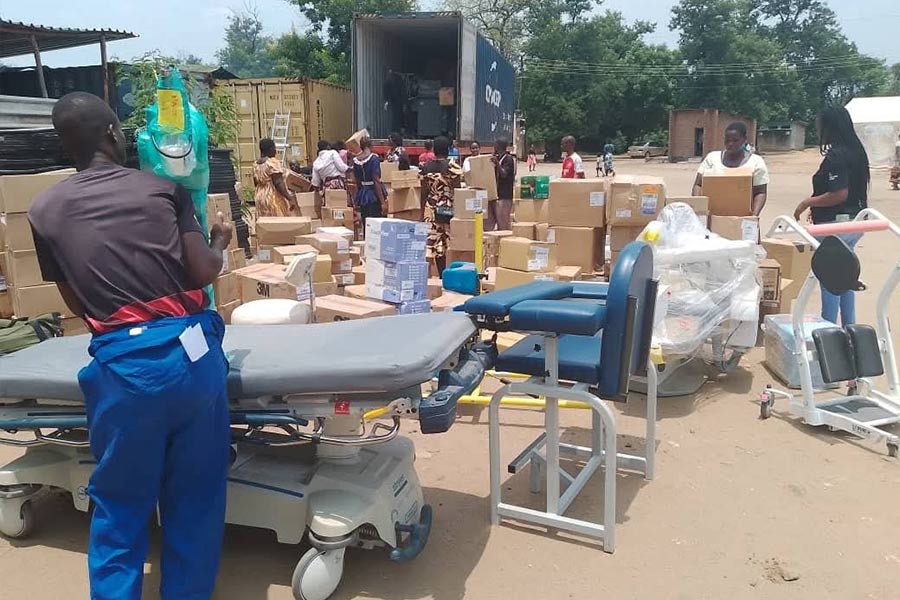
On a humid November morning in Thyolo, hospital workers lined the driveway of the district hospital: some in faded scrubs, others clutching worn-out clipboards shaped by years of improvisation without the bare essentials of a functioning health system.
For months, the facility, like many across Malawi, had been drowning in shortages: gloves, monitors, diagnostic tools, and even hope.
Then, a moment of profound relief.
When a 40-foot container valued at K2.5 billion rolled onto the hospital grounds on November 26, 2025, the applause that erupted was not ceremonial. It was a sound of release, of survival. For many, it felt like Malawi was finally breathing again.
The delivery was part of Malawi’s unprecedented 100-Container Health Care Service Strengthening Initiative, a massive K250 billion effort driven by The Patriots International (TPI). This diaspora-led nonprofit is refusing to watch the nation’s health system crumble under chronic funding cuts and the devastating aftermath of USAID’s withdrawal.
The Debt of Gratitude
At Malamulo Mission Hospital in Thyolo, another beneficiary, National Chairperson of The Patriots, Kamuzu Chibambo, captured the heart of the mission.
“The Patriots International is simply giving back to Malawi,” he said. “Many of our members benefited from free university education in this country. This is our way of honouring that gift.”
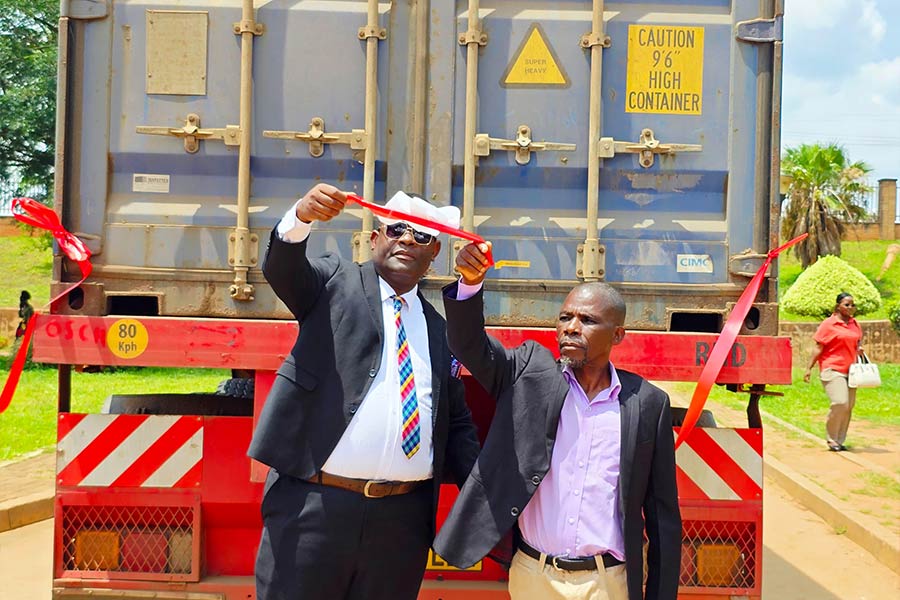
He emphasized that the initiative, launched in 2023, is rooted in equity, compassion, and service. “We want these materials to benefit the poor and uplift healthcare in the community.”
The donation to Malamulo alone — comprising wheelchairs, beds, mattresses, and theatre equipment — was valued at K2.5 billion.
A System on the Brink
When major USAID support was halted earlier this year, the effect on Malawi’s fragile health sector was immediate and devastating. Procurement pipelines stalled. Wards ran out of basic supplies.
Health workers were pushed to breaking point. Maternal wards improvised with candlelight when generators ran dry. Emergency rooms became waiting rooms for diagnoses that could not be made.
“The system was collapsing faster than we could improvise,” said Thyolo district medical officer, Dr. Denis Solomon. “This is a relief to us as a hospital.”
It is into this collapse that The Patriots International stepped, mobilizing donations through a formidable network: Project C.U.R.E., Islamic Relief USA, Malawi Initiatives, Elmhurst Presbyterian Church, UPS Foundation, and various Rotary and Lions Club chapters in Malawi, alongside generous Malawians abroad.
The result has been one of the most ambitious diaspora-driven healthcare interventions in Malawi’s modern history.
From Urgency to Action
Professor Edward Mbewe, who leads Malawi Initiatives in the U.S., described the mission as one born out of urgency and deep reflection.
“After God blessed us with everything abroad, we asked ourselves, what next? When we heard the stories from home, wards without monitors, theatres without basic instruments, we knew we had to act. This wasn’t charity. It was responsibility,” he added.
He added that the next phase will focus on specialized equipment such as CT scans, hip surgery kits, and dental machinery, and eventually on infrastructure like theatres and ambulances.
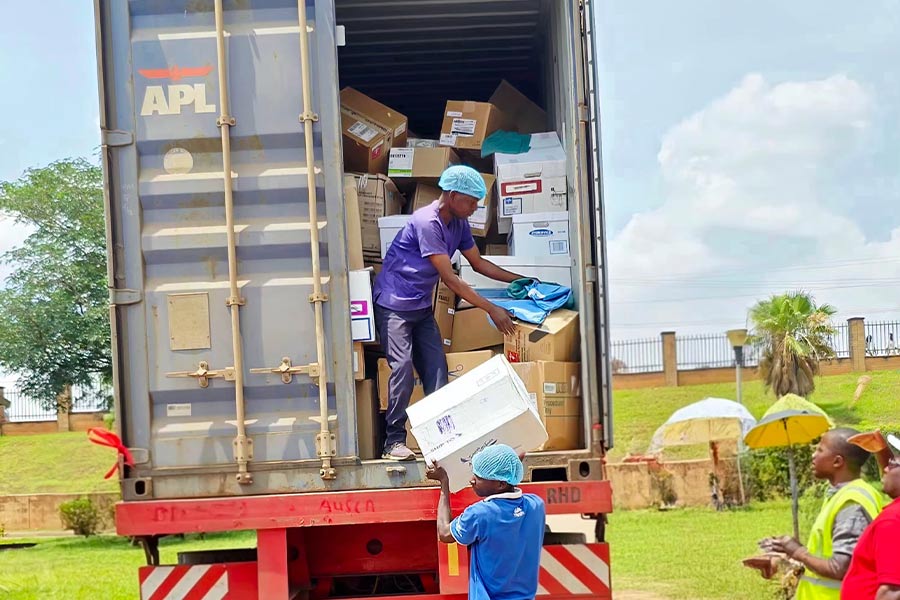
Already, Ntcheu District Hospital is a classic example of the program’s impact after the Medical Council of Malawi upgraded it to a three-star facility following the TPI equipment support.
The Malawi Embassy in Washington, through Ambassador Esme Chombo, played a critical coordination role. “We realized no one was coming to rescue Malawi. So, we decided to rescue ourselves,” Chombo said.
Rebuilding Dignity, One Container at a Time
Hospitals have responded with renewed hope. At Malamulo Mission Hospital, Chief Executive Officer Austin Dice said the equipment would immediately close long-standing service gaps.
“This equipment will be fully utilized to improve patient care. We are very grateful for this gesture.”
Director of Health Services, Dr. Mirriam Jere, described the program as “the most significant diaspora-driven health intervention in modern Malawi.”
“This is not just filling gaps. It is rebuilding the system.”
She summed up the emotional weight of the delivery: “This donation is not equipment. It is breath. It is dignity.”
Thyolo District Commissioner, Hudson Kuphanga, welcomed the intervention, calling it a crucial complement to government efforts.
“This support aligns with our government’s goal of improving healthcare services, especially in rural areas,” he said, adding a caution: “We need to take care of this equipment and avoid pilferage.”
Traditional leaders added a crucial community voice. Senior Chief Khwethemule urged fairness and transparency. “Since this equipment was donated freely, we urge the hospital to avoid charging patients heavily so that everyone can benefit.” Senior Chief Nchiramwera echoed the gratitude and issued a stern warning: “I know that we have thieves here at the hospital, but I will make sure that nothing is stolen.
Accountability and the Future
Unlike many past donations that gathered dust in storerooms, this initiative is anchored in a rigorous accountability system. Traditional leaders formally receive the equipment. With Project C.U.R.E. providing repairs and manuals, and local Patriots ensuring compliance, the equipment is immediately put to use.
Chikwawa District Health and Social Services Officer, Hope Moyo, affirmed that services previously stalled due to equipment shortages now have a clear path to resuming.
Thyolo becomes the 21st district to receive a container, joining Zomba, Nsanje, Mchinji, Neno, Rumphi, Karonga, Mzimba, Nkhata Bay, Machinga, Mzuzu, Chikwawa, and others.
With 100 consignments planned, the initiative aims to reach every district—covering government, CHAM, and IHAM facilities—by mid-2027.
A fiscal analysis shows that Malawi has for years allocated inadequate funds to the health sector, far below the Abuja Declaration’s recommended 15%.
In the 2025/2026 budget, the health sector received K741 billion, just nine percent of the national budget. This guarantees continued deficits, forcing managers to triage services.
Yet, in the shadow of global funding shifts, something powerful is happening. Malawians themselves, at home and abroad, are stepping into the gap.
Hon. Kamuzu Chibambo put it bluntly: “We are simply giving back to the country that made us who we are. We chose to help our ordinary people. We could choose to enrich ourselves, but no.”
And as new monitors beep, new theatre lights shine, and new hospital beds cradle patients across the country, one truth grows louder:
Malawi is refusing to die quietly. It is rebuilding itself—one container, and one act of patriotic responsibility, at a time.