














ZODIAK ONLINE
ArtBridge House, Area 47
Sect. 5, P/Bag 312
Lilongwe, Malawi
Sect. 5, P/Bag 312
Lilongwe, Malawi

Kasungu District Disaster Risk Management Officer, Shepherd Jere, says the reduction in the number of households expected to receive maize relief this year due to hunger, is an indication that food insecurity levels are gradually declining in the district.
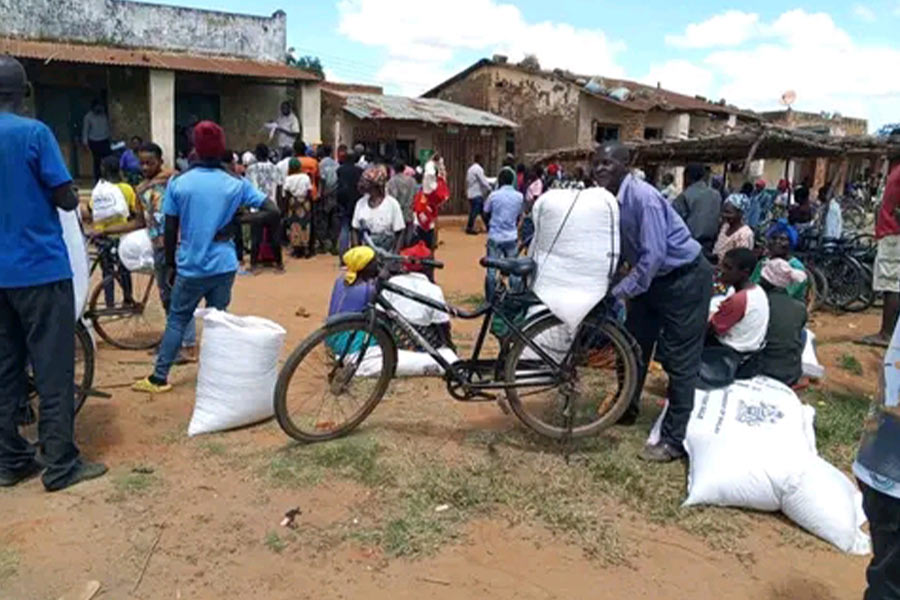
He made the remarks on Thursday, at Traditional Authority Simlemba, in the district, where his office distributed 50-kilogramme bags of maize to 1,043 households identified through assessments as the most food insecure in the area.
Last year, about 23,000 households in Kasungu District were earmarked to receive maize assistance from the Department of Disaster Risk Management Affairs (DoDMA), while this year the figure has dropped to 22,096.
Jere said the reduction in beneficiary numbers should not be a cause for concern, as assessment findings show a gradual decline in the number of people facing food shortages in the district.
"An increase in food aid beneficiaries usually signals a worsening hunger situation, hence a reduction should be viewed as a positive sign indicating that the problem is slowly being addressed," he said.
In his remarks, Traditional Authority Simlemba said he was happy that people in his area had received food assistance as an initial response to the hunger situation, revealing that it will help households remain strong as they prepare for the next farming season.
However, he expressed concern that the number of beneficiaries in his area has dropped to 1,043 from 1,261 last year, arguing that hunger appears to have worsened locally despite the overall district decline.
" I must also warn beneficiaries against selling the maize, instead of using it for household consumption. Once found doing such an act, we will report you so that you should be removed from the list," he said.
One of the beneficiaries, a 79-year-old Nataria Chirambo from Kaweta Village, thanked the government for the support, saying it will help her provide food for the seven children she looks after as they attend school.
The government, through DoDMA, will continue distributing maize to vulnerable households for three consecutive months, with each household receiving one 50-kilograms bag per month up to February.
