











ZODIAK ONLINE
ArtBridge House, Area 47
Sect. 5, P/Bag 312
Lilongwe, Malawi
Sect. 5, P/Bag 312
Lilongwe, Malawi

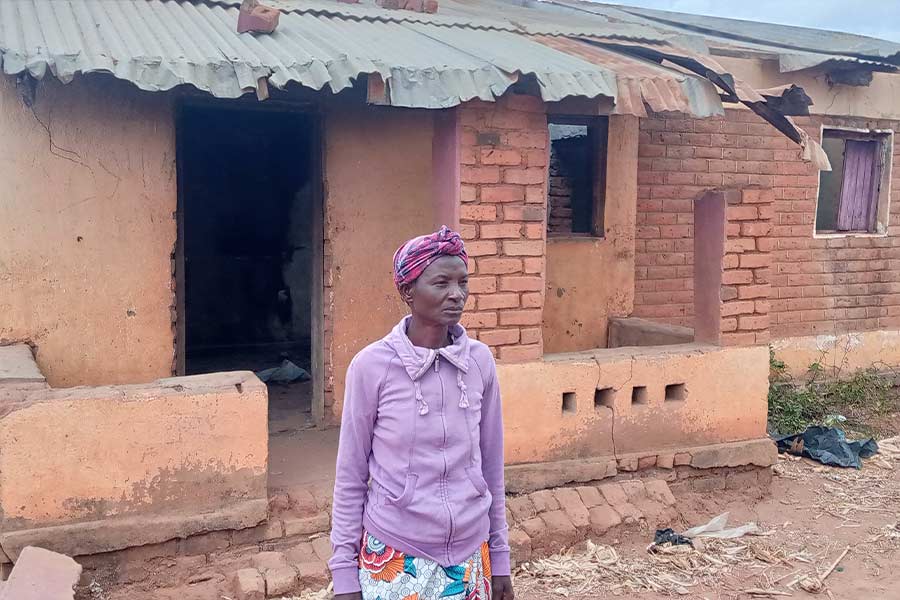
On the 30th of April this year, four elderly people waited in quiet dread for their turn to consume a dark, toxic concoction from a plastic bowl.
At the front of the line stood Alinafe Banda, a middle-aged woman and self-proclaimed witch doctor. She exuded a calm, practiced authority. One after another, the elderly men and women drank the fluid in silence. Their neighbors had branded them as suspected witches, blaming them for the mysterious illnesses and deaths haunting the village.
This was framed as a "cleansing" exercise.
Minutes after swallowing the brew, two men and one woman began vomiting and purging before collapsing. Within moments, they died where they fell.
A fourth victim, Lontiya Kamanga, was rushed to Mzimba District Hospital. She survived to tell the story.
"It is only by the grace of God that I am alive today," Kamanga recalls. "After taking the bowl of porridge, I instantly started purging and vomiting. I didn’t even reach my house. I went straight to the toilet. But my children gave me milk. When the police came to take the dead bodies, they took me as well, and I was treated at the hospital."
The deceased were identified as Paul Mahowe, 78, Charles Kamanga, 78, and his wife, Styness Shaba, 71. Police transported their bodies to Mzimba District Hospital, where autopsies confirmed they died of poisoning.
Grace Mtika lost both her father and mother-in-law during the ritual. She says the ordeal began after a string of unexplained deaths around Nezala Kamanga village.
Immediately after the four drank the porridge-like concoction, they grew visibly weak. However, the witch doctor forbade them from seeking medical help, insisting they would heal on their own.
"There was no time to think of taking them to the hospital," Mtika says. "We were afraid because of what the witch doctor told us. Then they died. We are heartbroken, losing both parents at once is devastating because they supported us in so many ways."

Meklina Thole’s husband, Paulosi Mahowe, was among the victims. Memories of that day remain vivid.
"I am deeply saddened because he was my provider," Thole says, fighting back tears. "But if it was the work of the devil, what else can I say? The dead cannot speak."
Police arrived the following day to restore order and oversee the burials. They arrested Village Headman Nezala Kamanga and another resident, Zex Banda, for allegedly permitting the illegal ritual. The witch doctor, Banda, fled into the night and remains at large.
Group Village Headman (GVH) German Mahowe recalls trying to intervene. He says he attempted to stop the ritual, but the witch doctor presented documents bearing official-looking stamps from the police and the District Commissioner’s office, claiming she was authorized to cleanse the village.
Both police and local council officials have since denied issuing any such permits.
Mahowe notes that identifying rogue witch hunters has become increasingly difficult. "These days, they enter our villages disguised as prophets and men of God," GVH German Mahowe explains. "Once allowed in, they begin accusing community members of practicing witchcraft."
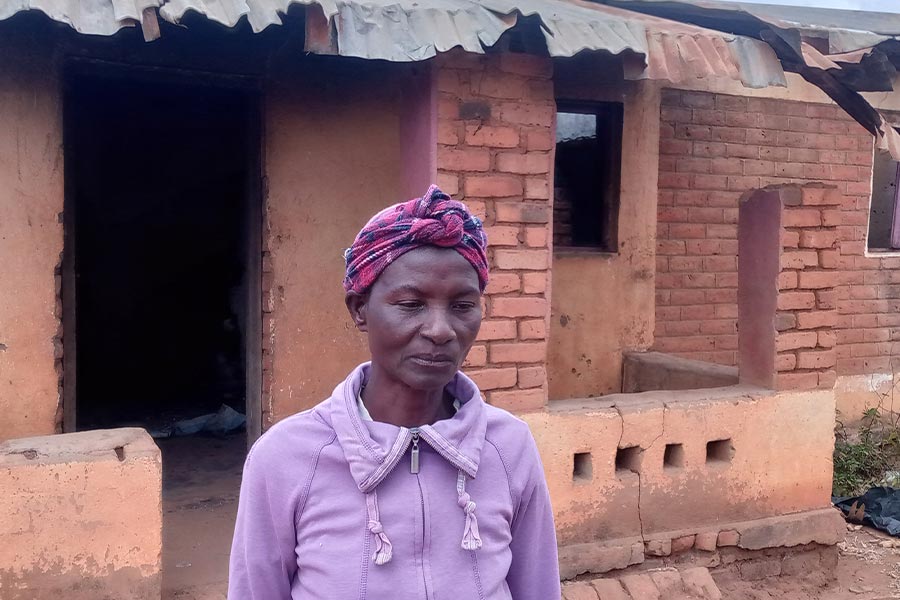
For Lontiya Kamanga, this tragedy was a terrifying echo of her past. In October last year, she watched helplessly as a mob accused her husband of witchcraft. They assaulted him, forced him to drink petrol, and threw him into their family home before setting it ablaze. He died instantly.
In the aftermath, twelve head of cattle, 15 goats, several pigs, and household electronics were looted. Today, the scorched ruins of her house stand as a stark reminder of that night. What haunts Kamanga most is the total lack of accountability.
"They assaulted my husband until he fainted," Kamanga remembers. "When he regained consciousness, they dragged him back, forced him to drink petrol, and beat him again until he died. Then they dumped his body inside our house and set it on fire. Up to now, those who carried out his brutal murder have not been arrested."
A Widespread Crisis
This tragedy is far from an isolated incident. Mzimba has long struggled with violent attacks driven by witchcraft accusations.
Bernard Nangwale, the District Social Welfare Officer, estimates that over 54,000 people in Mzimba South are above the age of sixty. He describes the rising statistics of violence against senior citizens as alarming.
"It is deeply unfortunate to see violence against the elderly escalating," Nangwale says. "Between 2024 and 2026, the district registered about seven murders of elderly persons accused of witchcraft. We are calling upon religious and traditional leaders to help us end this practice."
The crisis extends far beyond Mzimba. Data from the Malawi Network of Older Persons Organizations (MANEPO) reveals that over 300 elderly individuals were murdered across Malawi between 2016 and 2026—most at the hands of their own neighbors or family members.
MANEPO Executive Director Andrew Kavala reports that 17 elderly people have been killed in witchcraft-related violence this year alone, with more than 88 cases of abuse documented nationwide.
"We need security agents in the country to step up," Kavala emphasizes. "Perpetrators must be arrested, prosecuted, and given stiffer sentences upon conviction to deter others from committing these atrocities."
Human rights organizations argue that senior citizens are systematically scapegoated whenever rural communities face disease, poverty, or grief.
While Section 13 of Malawi’s Constitution explicitly obligates the state to respect and support senior citizens, enforcement on the ground tells a different story.
For decades, the legal framework relied on the archaic 1911 Witchcraft Act, which does not legally recognize the existence of witchcraft and instead criminalizes making such accusations.
However, an Afrobarometer survey indicates that three out of four Malawians believe witchcraft is real, leaving older adults vulnerable to mob justice.
To bridge this gap, Parliament passed the landmark Older Persons Act of 2024, explicitly criminalizing witchcraft accusations and establishing dedicated protections for senior citizens. Yet, human rights advocates warn that implementation remains dangerously weak.
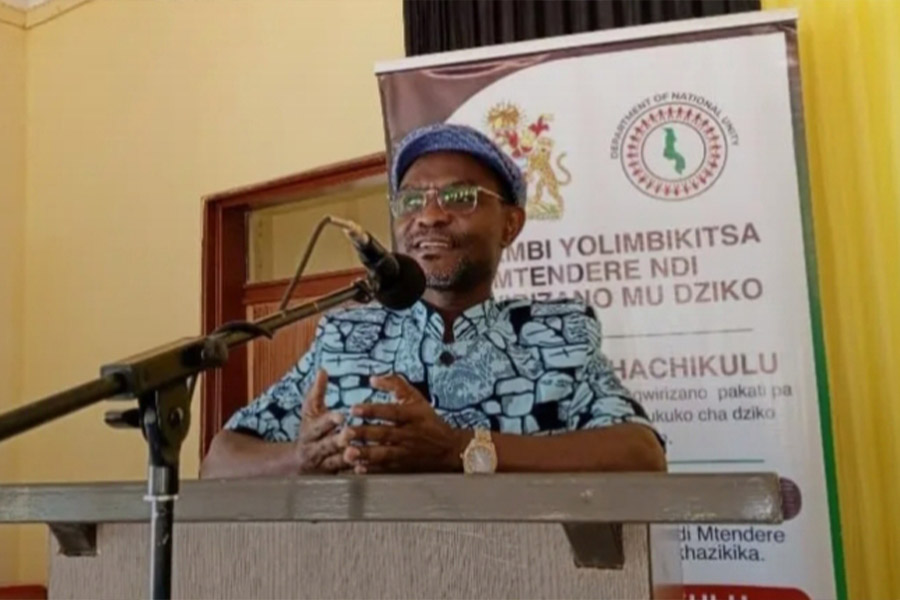
Minister of Local Government and National Unity, Ben Phiri, attributes the persistence of these accusations to deep-seated poverty and high illiteracy rates.
"Ignorance and poverty play a massive role in this," Phiri says. "In many remote areas, when an older person begins to prosper, their success is immediately attributed to witchcraft. This mindset must stop and will not be tolerated."
Deputy Minister of Gender, Community Development, and Social Welfare, Martha Mzomera Ngwira, notes that the government has intensified civic education campaigns in rural areas to combat harmful myths.
"We are taking active steps to prevent violence against the elderly," Ngwira says. "Through initiatives like the Social Cash Transfer Program, we are working to economically empower senior citizens and reduce their exposure to social vulnerability."
As the sun sets over Nezala Kamanga Village, the plastic bowls have been cleared away, but fear lingers in the air. The community is left with three new graves, one traumatized survivor, and a law that offers little protection off the page.
The Older Persons Act promised safety. But until law enforcement reliably apprehends perpetrators and communities choose understanding over superstition, Malawi’s elderly population will continue to pay with their lives. For them, justice delayed is not merely justice denied — it is a lingering death sentence.