

















ZODIAK ONLINE
ArtBridge House, Area 47
Sect. 5, P/Bag 312
Lilongwe, Malawi
Sect. 5, P/Bag 312
Lilongwe, Malawi

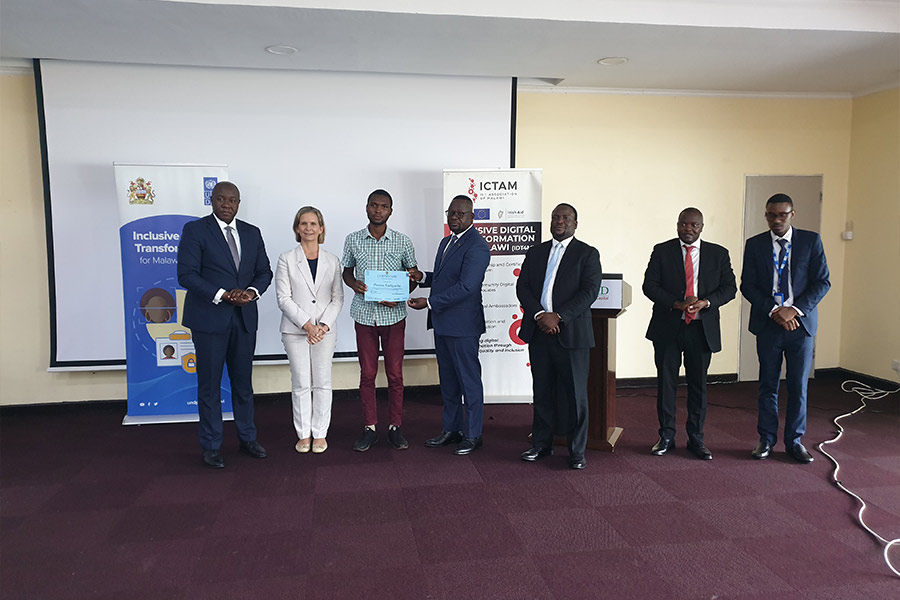
United Nations Development Programme (UNDP) Resident Coordinator Fenela Frost has underscored the importance of political will in driving Malawi’s digital transformation, saying skills development must go hand in hand with investments in infrastructure and supportive policies.
Frost made the remarks in Lilongwe during an award ceremony for 30 university students recognised as Digital Ambassadors under the Inclusive Digital Transformation Programme, implemented in partnership with the ICT Association of Malawi (ICTAM), Microsoft and Cisco Systems.
She said expanding access to digital technologies requires reliable internet connectivity, electricity and an enabling policy environment, adding that leadership commitment is crucial to translating strategies into tangible results.
“Political will is absolutely critical. If every Malawian is to have access to digital technologies, then infrastructure and an enabling environment must be in place,” Frost said, citing President Peter Mutharika’s recent State of the Nation Address as evidence of renewed government commitment.
Frost compared Malawi’s digital journey with Rwanda, noting that although Malawi developed early digital strategies, implementation has lagged due to limited political and institutional support. She expressed optimism that increased political commitment could drive transformative impact across governance, education and service delivery.
Frost also revealed that UNDP is working on a Chichewa language artificial intelligence model to ensure digital and AI tools are accessible to Malawians regardless of education level or language, urging the country to move from being a consumer to a producer of digital solutions.
Meanwhile, Minister of Information Namalomba challenged Malawian youths to harness their digital skills to develop local technological solutions instead of relying on foreign innovations.
Namalomba said Malawi has long depended on imported technologies, contributing to inefficiencies in public service delivery, citing persistent queues at immigration offices and road traffic departments as areas that could benefit from locally developed digital systems.
“We have our own talent and young people who can develop solutions for local consumption. They must begin to offer solutions instead of waiting for outsiders to dump technologies here,” he said.
The minister urged youths to address governance challenges such as inefficiency, corruption and abuse of authority through digital innovations that enhance transparency and service delivery, adding that empowering young people with digital skills is key to accelerating national development.
The Inclusive Digital Transformation Programme aims to equip university students with advanced digital skills and industry-recognised certifications from Microsoft and Cisco.
More than 3,000 students have participated in the programme so far, with the top performers recognised as Digital Ambassadors.
ICTAM President Clarence Gama said the event celebrated students who completed at least five professional training courses on the programme’s Konzo platform, noting that the training complements university curricula and enhances students’ capacity to develop real-world applications.
Gama said technology knows no geographical boundaries and that Malawian students now have access to the same global training content as their peers worldwide. He emphasised the importance of collaboration and partnerships to develop digital solutions for both local and global markets.
“With technology, nothing is impossible. These students have the same content as the rest of the world, and that is the most powerful part,” Gama said.
One of the graduates, University of Malawi student Innocent Gomwa, said the programme helped him acquire programming and digital literacy skills that were difficult to access through formal classes.
“Through the self-help platform, I learned programming languages such as HTML and CSS, and how to create awareness in local communities about proper internet use, privacy and responsibilities,” Gomwa said, adding that the training has equipped him to promote safe and responsible digital practices.
The programme supports Malawi’s Vision 2063, which aims for an inclusive, self-reliant and technologically advanced society, and aligns with the Malawi Digital Economy Strategy, which seeks to expand connectivity, develop local digital solutions, and leverage technology for socio-economic development.