














ZODIAK ONLINE
ArtBridge House, Area 47
Sect. 5, P/Bag 312
Lilongwe, Malawi
Sect. 5, P/Bag 312
Lilongwe, Malawi

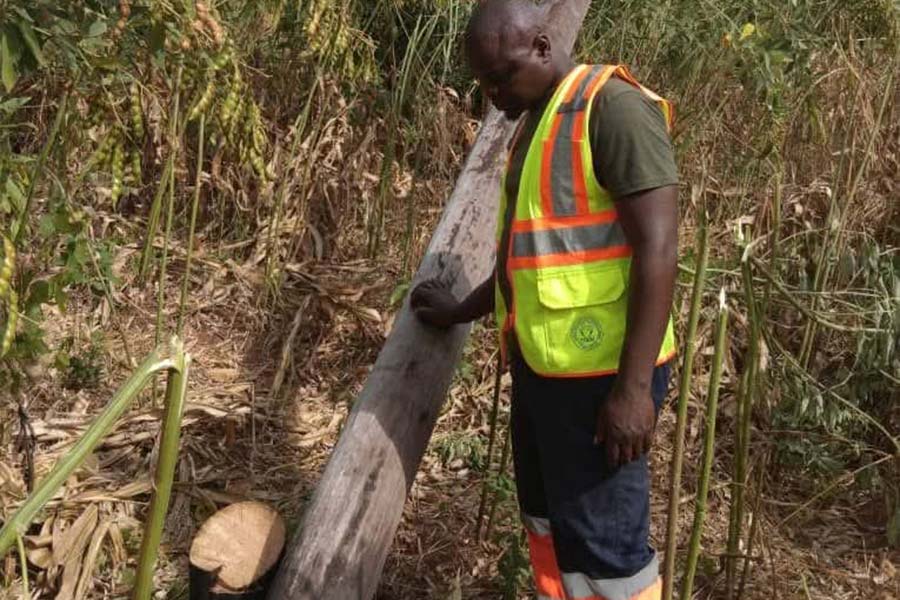
When darkness falls in parts of Malawi today, the cause is not always a fault in the system or a shortage of power generation capacity. Increasingly, it is the work of vandals.
From the dusty trading centers of Thyolo to the forests of Phalombe, from water treatment plants in Lilongwe to transformers in Chikwawa, Chiradzulu, Zomba, and Blantyre, Malawi’s electricity infrastructure is under sustained attack by criminals targeting aluminium conductors, copper wires, transformers and other critical components for resale and recycling.
For the Electricity Supply Corporation of Malawi Limited (ESCOM), the damage goes far beyond broken poles and stolen cables. The growing wave of vandalism is draining billions of Kwacha, disrupting essential services and slowing the country’s march toward universal electricity access. At least six incidents were recorded in the month of May 2026 alone.
The Corporation recorded 138 cases of vandalism to its infrastructure between October 2025 and March 2026, a conduct that left 40 transformers down.
In April 2026, additional five transformers were vandalized, three of them in Lilongwe and one each in Blantyre and Chiradzulu while in May, one transformer was ransacked in Zomba.
“We are appealing to Malawians to help protect transformers and other critical assets. We are not just losing equipment. We are losing life and development opportunities. Infrastructure vandalism is not only a commercial threat, but also a direct attack on national development," lamented ESCOM’s Pilirani Phiri, Chief Public Relations and Communications Officer.
Phiri says the utility body is losing over K3 billion every year in indirect costs associated with replacing vandalized infrastructure. The money, Phiri indicates, could otherwise be invested in expanding electricity access to underserved communities.
From Power Lines to Cooking Pots
In one of the most shocking cases this year, Police in Blantyre arrested three suspects accused of stealing ESCOM aluminium conductors and recycling them into aluminium pots for commercial sale.
The suspects, Felix Patrick, Patrick Mwanyula and Keston Tambala, were arrested after members of the public allegedly caught one of them cutting an ESCOM conductor from a wooden pole in Mulanje.
Subsequent investigations led police to an aluminium pot manufacturing workshop in Blantyre where officers recovered aluminium conductors, nine aluminium pots, hacksaws, gloves and other tools believed to have been used in the operation.
The arrests exposed an organized syndicate that vandalizes electricity infrastructure and converts stolen materials into household products for profit.
For communities already struggling with unreliable electricity supply, the consequences are severe.
At Kuntaya Water Treatment Plant in Lilongwe, vandals targeted power cables supplying booster pumps operated by the Lilongwe Water Board, disrupting water supply to surrounding areas. This followed another incident that occurred at Chimtolo Village, Traditional Authority Khongoni in Lilongwe, where unknown criminals vandalized electricity poles and conductors belonging to a power line project in the area.
In Phalombe, three Fundis Cross Overhead Line electricity poles were vandalised near Mpata Forest, cutting power to Mpata Trading Centre, schools and nearby homes for days.
A barber at Mpata, Chrispine Makwale, says that power cut a couple of weeks ago affected his business.
"I solely depend on the business to fend my family. So I am appealing to law enforcers and community leaders to ensure they net the culprits. I fears failure to arrest them the trend will continue," said Makwale.
Elsewhere in the same month of May 2026, a transformer was vandalized at Kamuzu View in Chikwawa while thieves also stole a pole and High Voltage fuse holders from transformers at Misesa Ngwira, Chiwembe FAM, ITG and Kwacha opposite Ziba Church, including 400 meters of aluminium conductor in Bangwe, Blantyre.
Each incident leaves communities stranded in darkness and institutions paralyzed.
Hospitals in the affected areas struggle to preserve medicines and operate equipment. Businesses lose productivity. Schools suspend evening studies. Water supply systems fail.
“It is everyone’s responsibility to safeguard national infrastructure because electricity is life and a key stimulus for economic growth,” Phiri stressed.
On the night of 17 February 2026, Thyolo ESCOM official apprehended two suspects Yankho Kamwendo, 22, and Nizza Mbewe, 22, after they had vandalized a transformer at Lipulo Village, Senior Chief Nchiramwera in and stole 200 meters of 70 (mm) Hard Drawn Copper Conductor Cable wires.
Senior Chief Nchiramwera of area attested that theft of a transformer at Lipulo area paralyzed economic activities in the area, forcing locals to seek services like maize mill in far places.
The chief revealed that he took it upon himself to order the district police and the court to incarcerate the convicts and now they are serving a seven years sentence.
"I don't want foolishness in my area. I went to Thyolo police station where the suspects were kept, and ordered them that the duo should not be released on bail, but be punished accordingly," he said.
Similarly, Thyolo district commissioner Noel Dakamau acknowledged that the vandalism has reached alarming levels and called on the community members to be vigilant and guard against any attempt to vandalize utility infrastructure, noting that the vice is a big blow to the development of the district.
"You know equipment like transformers are very expensive. So don't harbour thieves in your homes, be alert and report any suspicious activities. I don't think a person can come all the way and steal the equipment without someone from the areas," he said.
According to ESCOM publicist, Phiri, despite the setbacks, the corporation remains determined to fight back through enhanced enforcement, public awareness, and community sensitization on the dangers and consequences of the vice.
He said, "we have launched a high-stakes, ad-hoc 30-day nationwide campaign to raise public awareness and aggressively dismantle the networks enabling the destruction."
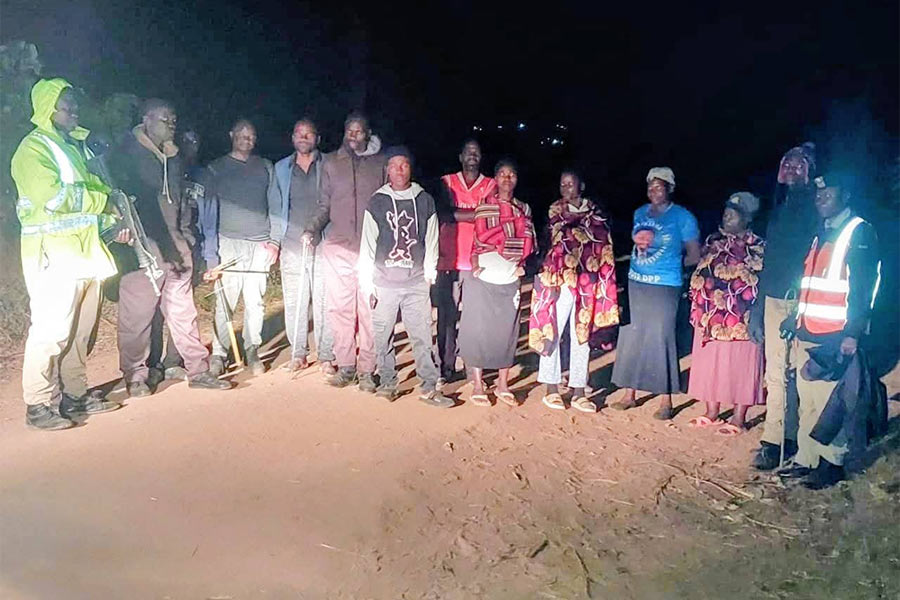
On the night June 3, 2026, a joint patrol team of Police Officers and community members foiled and intercepted vandals at Nazinomwe Village, in Zomba, as they targeted a transformer. The suspects had already disconnected high-voltage fuses and cut 1.5 metres of earth mat, but fled and abandoned everything upon spotting the patrol.
"These patrols are not random acts of bravery, but organized and deliberate community efforts mounted in response to a rising wave of syndicated vandalism nationwide. The utility salutes residents who sacrifice their night’s rest to protect infrastructure that powers homes, hospitals, schools and businesses, noting that by guarding transformers and cables they are guarding their own communities," said ESCOM publicist.
The Hidden Economic Cost
Beyond the immediate blackouts lies a deeper economic wound.
At Nchima Tea Estate in Thyolo, Senior Operations Manager Amit Nain said persistent ESCOM outages and vandalism have forced the estate to rely heavily on diesel generators.
He explained,“generating electricity through diesel generators is nearly four times more expensive than using ESCOM power. The inconsistent power supply also negatively affects the quality of tea production.”

With Malawi already grappling with fuel shortages, many businesses find themselves trapped between rising operational costs and unreliable electricity.
Energy expert Dr. Suzgo Kaunda of the Malawi University of Business and Applied Sciences warned that vandalism is part of a wider continental crisis fueled by the growing demand for scrap metal and weak protection systems.
“Investment in protection and public awareness is urgently needed because vandalism slows development and undermines the operations of the country’s power utility provider,” Kaunda said.
To deal with this, in 2023, government suspended the exportation of scrap metal in the country. The ban followed rampant vandalism of critical public and private infrastructure, such as the ESCOM electricity cables, water boards, telecommunication equipment, and railway lines.
The government has been reviewing the outdated Second-hand and Scrap Metal Dealers Act, with a goal to formulate new standard operating procedures (SOPs) and institute fresh registration protocols for dealers before allowing any legal, regulated trade to proceed.
Social commentator Caesar Kondowe believes the vice is robbing Malawi of future progress.
“The persistent vandalism is draining resources that could otherwise be invested in expanding electricity access,” Kondowe observed, noting that only about 18 percent of Malawi’s population is connected to the national grid.
Justice and Deterrence
The Electricity Amendment Act of 2024 penalises theft, including 30 years’ imprisonment with hard labour (IHL) for vandalising, destroying, or being found in possession of stolen electricity installation equipment, without an option of a fine. And authorities say they are intensifying enforcement measures to deter offenders.
In April this year, the Thyolo Chief Resident Magistrate’s Court sentenced Nyson Mizati to six years imprisonment for vandalizing the ESCOM equipment at Msuwazi Trading Centre valued at K7.5 million.
Meanwhile, another case involving a Chinese national accused of possessing stolen ESCOM copper wires remains before the courts in Thyolo, highlighting the complexity and possible commercial networks behind the trade.
Zhixianga who is a Limbe-based metal dealer, allegedly bought 80 kilograms of copper wires from the transformer which was dismantled around Makwasa in the district in February 2025. Police arrested some suspects who implicated him.
But ESCOM says arrests and convictions alone will not solve the crisis.
For a security analyst Dr. Sheriff Kaisi, the incidents signal an inside job involving people within the ESCOM, indicating that vandalism of transformers can only be done by insiders.
"One would not just wake up in the morning and take down a transformer, or a copper wire. These are the people who previously worked at the ESCOM or EGENCO. I may call upon the corporation ensure staff retention and train their guards with special security knowledge on how to protect the materials," he said.
He added: "I suggest that ESCOM should work with the communities to help with undercover surveillance and track down such criminals. Again, there must be heavy punishments to the perpetrators."
Fighting Darkness with Development
Ironically, the attacks on electricity infrastructure are escalating at a time when Malawi is pushing aggressively to expand national connectivity.
Through the Accelerating Sustainable and Clean Energy Access Transformation (ASCENT) project, the ESCOM and the Ministry of Energy aim to connect 235,000 households to electricity by 2030 with support from the World Bank.
The initiative follows the success of the Malawi Electricity Access Project (MEAP), under which ESCOM exceeded its target by delivering more than 191,000 new connections before the 2025 deadline.
During a switch-on exercise in Lilongwe, Minister of Energy and Mining Jean Mathanga condemned the vandalism and challenged ESCOM to execute the ambitious programme with transparency and efficiency.
“As we roll out this project, we must move toward a culture of accountability. Get rid of bad apples and incentivise performers. If they are underperformers clogging the system and connections must be fired," warned Mathanga.
Yet every vandalized pole, stolen transformer and cut conductor threatens to reverse these gains.
For communities waiting for first-time electricity connections, vandalism delays hope itself.
A National Responsibility
As ESCOM intensifies awareness campaigns and collaborates with police, traditional leaders and communities, the corporation insists that the fight against vandalism cannot be won by institutions alone.
In villages and townships where power lines snake across fields and transformers hum beside trading centers, the battle for electricity has become a battle for national progress.
And until that battle is won, Malawi’s dream of universal access to reliable electricity will remain vulnerable to the hands determined to profit from darkness.