











ZODIAK ONLINE
ArtBridge House, Area 47
Sect. 5, P/Bag 312
Lilongwe, Malawi
Sect. 5, P/Bag 312
Lilongwe, Malawi

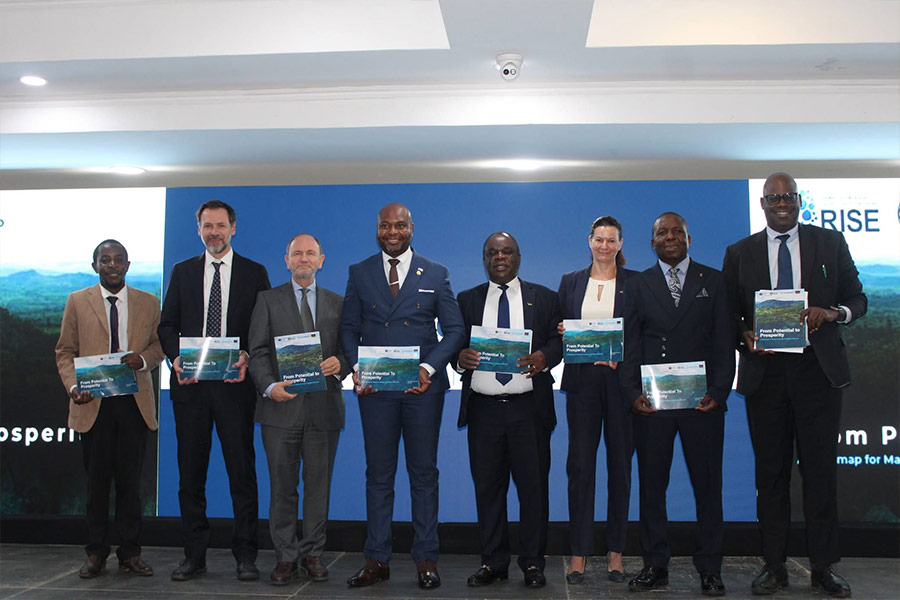
In a major bid to arrest severe environmental degradation, the Government of Malawi has launched three landmark environmental frameworks, declaring a new "covenant" to protect the country's dwindling natural resources by pairing modern science with ancient indigenous wisdom.
These are National Biodiversity Strategy and Action Plan III (NBSAP III), the Seventh National Report to the Convention on Biological Diversity, and the National Ecosystem Assessment (NEA) Report.
The tri-launch comes at a critical time for Malawi, which is grappling with the acute impacts of climate change, said Minister of Natural Resources Patricia Wiskes, drawing a direct line between environmental destruction and humanitarian crises.
"For too long, we have treated our natural resources as if they were limitless," Wiskes said. "We have cleared forests for charcoal. We have overfished our lakes. We have allowed rivers to silt up and wetlands to vanish. The result is clear: droughts are harsher, floods are deadlier, food is scarcer, and our children inherit a Malawi less rich than the one we received."
To illustrate the high stakes, Wiskes revealed that the Mpatsanjoka wetland in Salima has gone completely dry—a stark reminder of accelerating ecological loss.
Beyond Science: The Power of Indigenous Knowledge
A key highlight of the launch was the unique composition of the National Ecosystem Assessment Report, which relies equally on scientific data and Indigenous and Local Knowledge (ILK).
Addressing the delegates on behalf of UNESCO, Joseph Karanja, the BES-Net ILK Project Officer, challenged policymakers to look at nature through a different lens. He pointed to the way elephants navigate the Nyiko-Vwaza Transfrontier between Malawi and Zambia without modern technology.
"How do they do this?" Karanja asked. "They do so without satellite maps, without modern data systems. They rely instead on instinct, memory, and a deep understanding of their environment. It reminds us that there are different ways of knowing—ways that go beyond what science alone can offer."
Karanja revealed that the landmark assessment features direct contributions from over 500 ILK holders and community representatives spanning the entire country—from Zokore, Kazuni, and Nkhata Bay in the North, to Mbenje and Navigonzi in the Central region, down to Mulanje, Lake Chilwa, and Nsanje in the South.
"Traditional knowledge is not a relic of the past," Karanja added. "It is living, it is dynamic, and it continues to guide biodiversity conservation. When we recognise and value ILK, we are doing more than strengthening environmental policy—we are safeguarding cultural identity."
The Economic Power of Nature
The policy rollout underscores how deeply Malawi's economy and population are tied to the health of its ecosystems. According to government data released at the summit:
85% of Malawians depend directly on natural resources for daily needs.
12.8% of the national GDP is driven by biodiversity-related sectors.
USD 352 million was the valued worth of energy supplied by forest resources alone in a single calendar year.
516,000+ jobs and 6.7% of GDP are supported by nature-based tourism.
1,000+ fish species reside in Lake Malawi, with nearly 90% found nowhere else on Earth.
Rural Communities Hit Hard
“As the traditional leaders and our communities, we depend fully on the environment for our livelihood. So, these documents will be very important to shape how we go forward, how we use natural resources sustainably to take us way into our future and hand this future to our siblings, our children, our grandchildren, who will be beneficiaries from the same natural resources that we are conserving as of now.
“Currently, the resources are diminishing, but when we also look at the rainfall pattern, it's erratic in most cases, resulting in poor crop production in our communities,” said Inkosi (Senior Chief) Mpherembe.
He noted that most Malawians are living hand to mouth as far as food is concerned, which is not very healthy, saying as local leaders they wish Malawians had enough food even to share to those lacking.
These documents will assist us to move forward, to map our way forward so that we produce enough for ourselves and to sell a little bit to sustain certain programs that are there within our families, added the chief.
Action, Accountability, and 'Polluter Pays' Laws
The three newly launched instruments aim to move the country from policy to practice.
While the NBSAP III serves as a comprehensive roadmap for ecosystem restoration and protected area management, the Seventh National Report offers what Wiskes described as an "honest and transparent account" of Malawi’s conservation gaps, admitting to limited financial resources and poor institutional coordination.
She emphasized that under the leadership of His Excellency Professor Arthur Peter Mutharika, the strategies will not be allowed to just "remain on shelves," noting that environmental preservation is foundational to achieving the Malawi 2063 vision of an inclusively wealthy and self-reliant nation.
Taking a hard line on enforcement, the Minister warned that the government would rigorously enforce the Environment Management Act.
"Polluters will have to pay. Violators of environment and natural resources laws will have to face justice," Wiskes stated, adding that every ministry and district council will be legally aligned with NBSAP III.
To fund these ambitious initiatives, the government plans to explore innovative financing mechanisms, including green bonds, public-private partnerships, and payments for ecosystem services, said Wiskes.
The minister called on both the Government and UN partners, including UNEP-WCMC and the UNDP, to ensure the reports are not an endpoint, but the beginning of an aggressive campaign to move from evidence to action.