










ZODIAK ONLINE
ArtBridge House, Area 47
Sect. 5, P/Bag 312
Lilongwe, Malawi
Sect. 5, P/Bag 312
Lilongwe, Malawi

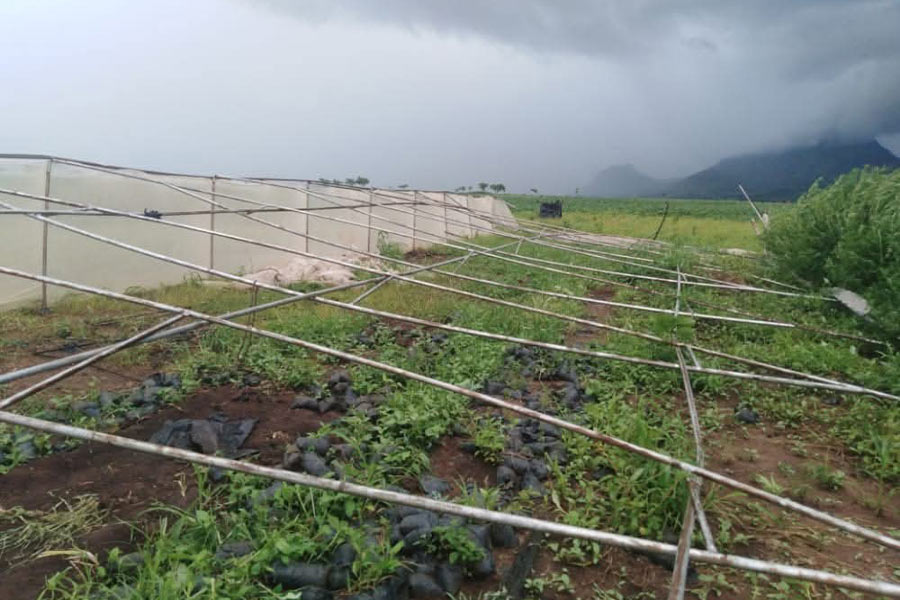
What was once hailed as Malawi’s next economic breakthrough has, for many farmers, turned into a costly illusion.
In 2021, cooperatives across the country plunged into industrial hemp farming, lured by promises that the crop—dubbed “green gold”—would rival tobacco as a top foreign-exchange earner.
With projections of up to $700 million in annual revenues, hope spread quickly from policy rooms to rural fields. For thousands of smallholder and commercial farmers, it seemed like a rare chance to escape the volatility of traditional crops and poverty.
Just a few seasons later, that promise lies in ruins.
By 2022, reports from the Cannabis Regulatory Authority (CRA) showed more than 7,000 farmers had expressed interest in cultivating hemp. Many borrowed heavily, pooling resources into cooperatives to meet steep entry requirements.
Licenses alone cost as much as $10,000 (about K18 million), forcing farmers into financial risks they could scarcely afford. Still, optimism prevailed. They built greenhouses, installed solar systems, bought certified seeds, and followed regulatory procedures to the letter.
Kumvana Limited Company in Thyolo was one such cooperative. With 70 members, they invested around K50 million in 2021—two greenhouses worth K13 million each, license fees, registration costs, labor, and land preparation. Everything pointed to a structured, regulated industry with oversight and market guarantees.
Then, at harvest, everything fell apart.
The off-taker they had contracted, expected to buy their produce, vanished. Communication ceased. The CRA, which had been actively involved through inspections and guidance during the growing phase, also went silent. Left with harvested hemp and no buyer, the cooperative watched its investment rot.
“All the fees totalled about K15 million,” recalls chairperson Fatsani Chakwana. “Constructing one greenhouse cost K13 million. CRA auditors and extension workers visited us regularly, and everything looked rosy, only to dump us when the crop was ready. We pushed for them to buy, but nothing came of it, even after such a huge investment.”
He added: “This has affected us deeply. We lost everything. We are still committed to farming, but we need a refund. We hear there is a new CRA board—it should help us recover our money.”
Their story is not unique. Across Malawi, about 60 cooperatives share a similar fate. Farmers accuse the United States Cannabis Association (USCA), the government-approved off-taker, of failing to honor agreements that included supplying seeds, offering training, and purchasing the final product. Contracts explicitly barred farmers from selling to alternative buyers, effectively trapping them in a system that collapsed without warning.
One clause underscores their frustration: “The off-taker (USCA) agrees to buy all produce from Kumvana Limited Company whose produce is the product of off-taker’s seeds or seedlings,” the agreement reads, also restricting growers from selling to any other party without approval.
For other cooperatives, the experience was just as devastating.
“We uprooted the hemp and stored it, but had nowhere to sell it. We tried to talk to them, but they gave no feedback. The harvest spoiled and lost quality,” said Frank Kasuma, secretary of the Blantyre Cannabis Association. “We were 50 members. We want CRA to refund what we invested because, as a regulator, they knew the off-takers but still abandoned us.”
USCA chief executive officer Paul Maulidi acknowledged the issue but declined to comment over the phone. “I understand the issues that require my explanation, but I believe this can best be done face-to-face, not on the phone. Should you need the encounter, please arrange a meeting,” he texted.
For many, the losses are not just financial—they are deeply personal. Loans remain unpaid. Trust in institutions has been shaken. Livelihoods built on hope have crumbled under uncertainty.
What makes the collapse more painful is how close success once seemed. Regulatory officials and extension workers had visited farms regularly, reinforcing confidence. There was structure, oversight, and what appeared to be a functioning market pipeline. Farmers trusted the system, and the system failed them.
Even the glamour attached to the industry added to the illusion. In 2021, announcements that international figures like retired boxing icon Mike Tyson could be involved as brand ambassador fuelled excitement. Malawi delegations reportedly travelled abroad for negotiations. For farmers on the ground, it all signalled legitimacy and global opportunity.
Yet, beyond the headlines, the fundamentals were fragile.
Experts now point to structural weaknesses: high barriers to entry, overreliance on a few off-takers, and limited transparency in industry management. The law itself required farmers without processing capacity to secure off-taker agreements, placing enormous power in the hands of buyers. When they failed, the entire chain collapsed.
There are, however, faint signs of a reset. The new Cannabis Regulatory Authority board has pledged reforms.
Board chairperson Chauncy Jere told Zodiak they “will enhance transparency and accountability in the cannabis industry by, among other measures, supporting regulatory decisions that are open to scrutiny.” Without addressing specific farmers’ calls, Jere said the industry should be a source of employment, revenue, and dignity—not exploitation.
“We will establish robust, transparent, and efficient regulatory frameworks that ensure the highest standards of compliance and accountability,” he added.
Meanwhile, agriculture expert Dr. Lonjezo Masikini hopes the new board will match words with actions, noting it must “collaborate with different stakeholders for the growth of the industry.”
For now, though, the fields tell a different story. What once stood as a symbol of economic transformation has become a reminder of risk, poor oversight, and broken trust. The dream of green gold has not entirely died, but for many Malawian farmers, it has already cost far too much.