












ZODIAK ONLINE
ArtBridge House, Area 47
Sect. 5, P/Bag 312
Lilongwe, Malawi
Sect. 5, P/Bag 312
Lilongwe, Malawi

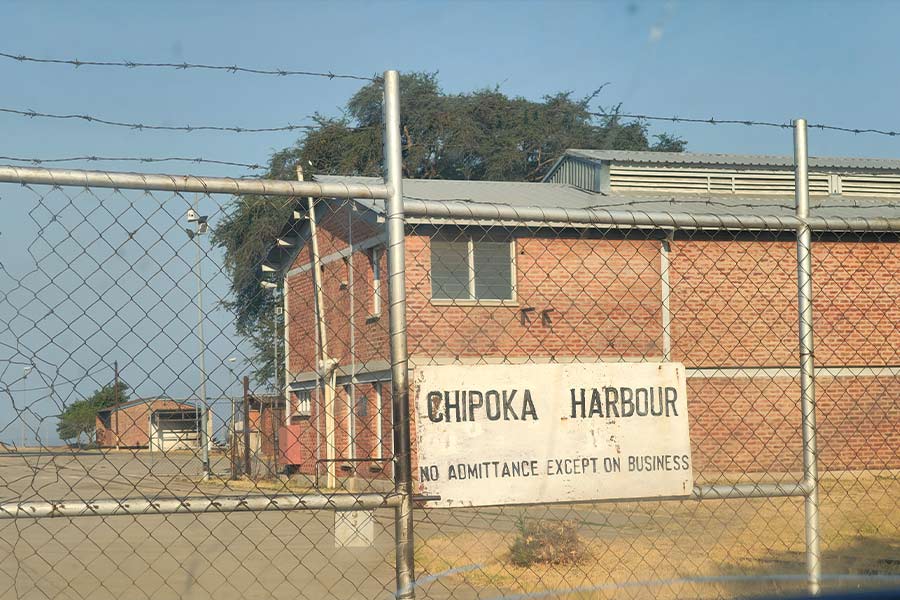
Once upon a time, goods would get into Malawi from either Mozambique or Tanzania through Lake Malawi at Chipoka inland port in Salima and by road or rail into Blantyre, Lilongwe or Mzuzu cities.
Today that is history. The road network, the rail network and the lake services are no longer as vibrant while the socio-economic status of the people and their nation is also plummeting.
In this feature, Eamon Piringu follows how policies and administrative decisions have cost Malawi in millions, leaving key infrastructure along the lake Malawi underutilized, and rumbling down while opportunities for trade, transport and economic growth untapped.
Eamon takes us to Chipoka where an in-land port that eased haulage of international goods and service now lies in pathetic ruins.
When you visit Chipoka inland port in Salima, you marvel at the vision of our forefathers.
They were amazingly strategic about the transport network for Malawi, integrating rail, road and water transport. A rare combination that positioned Chipoka as a critical hub for regional trade.
Clearly, it would drive economic growth as it also linked Malawi and neighboring countries.
Richard Poya is 85. He has been a citizen of Chipoka for most of his life.
He once eked a living offloading goods from ships at the inland port.
“When the port was active we used to do piece works by offloading goods from large ships that were transporting cargo to different areas such as Likoma and Nkhata Bay. This was an opportunity for us to earn our bread. Things are different now,” he said.
Irene Sikenala is a business lady. She says Chipoka was once a flourishing business hub.
She frequently travelled to Tanzania and Mozambique herself.
“We used to board ships at this port to Mozambique through Makanjira in Mangochi before connecting to Zimbabwe for business engagements. Life and business were easier than they are now. Today our businesses have declined in performance due to financial challenges,” reminisced Sikenala.
Since 1935, Chipoka was a vital intermodal point.
Lake ferries, trucks and trains connected Malawi to Mozambique and Tanzania moving goods.
That genius strategy that smoothly took off in the 1930s is now in ruins and a near-museum site.
The now abandoned inland port in Chipoka Township sits on the edge of Lake Malawi in Salima district, some 127 kilometers from the capital city, Lilongwe.
The port stretches along the calm crystal waters of the lake but as a white elephant.
Deterioration of the network began at the dawn of the third millennium.
Government began issuing concessions for the management of the country’s ports.
And little by little, the traditional sounds of trains, horns of ships and road trucks faded into oblivion, with it, the downward spiral of the gains on foreign exchange earnings.
Today, rusting equipment, idle railway lines and empty docks tell the story of a forgotten dream.
The place is now a marketplace with hundreds of makeshift shacks belonging to fishermen.
They bring fish ashore, dry it here and sell it off to fish vendors for resale in other towns and cities.
Meanwhile, travelers on the lake board water vessels at Senga Bay, which, ironically, has no jetty.
Cydric Njera, a business person, speaks on how difficult travelling has become.
“Traveling through Senga Bay is so hard for us. We are supposed to be picked in canoes and boats all the way to the ships that docks at a far distance in the lake. This is life threatening and costly as we spend a lot to travel and move the goods. Chipoka was good. We are incurring losses,” Njela lamented.
While Chipoka is wasting, the situation at the port at Senga Bay, Chizumulu and Nkhotakota is life-threatening to passengers.
It is worse on Likoma Island as explained by businesswoman, Gwyneth Kaponda.
“The ship docks at a far distance from the shore, then we have to use boats and canoe. If you have cargo, like in my case as a maize trader, it is a huge challenge because we have to use ropes to transfer our goods from the ship to the boats. Sometimes the goods miss the boats and go into the water, and once that happens, you cannot recover your property. That’s a guaranteed loss. It happens frequently,” laments Kaponda.
From 2002, Glen’s Waterways was awarded a 20-year concession to revitalize the sector through modern passenger and cargo vessels, including container carriers and fuel tankers, it was thought.
Just six years later, the concession was transferred to Mota-Engil for 35 years under Malawi Lake Services.
The result was not different until the concession was terminated.
Chipoka inland port remains deserted. Ships no longer dock here. No train services any more.
Joseph Shekiteni Banda is CEO for Malawi Lake Services.
He acknowledges that termination of concession with Mota Engil was about inactivity at Chipoka.
“You can imagine the kind of economic activities that we are losing out by not using Chipoka harbor. We are losing so much; economically and service provision. Using Senga Bay is not good enough for our passengers. We wish to go back to how we were running this port and other facilities along the lake. Siltation of the harbor is also a challenge. It requires dredging and other interventions to restore operations,” he said.
Christopher Mbukwa is an economist. He says the inland port has potential to drive the Malawi economy because it is centrally positioned and easily accessible from all regions and neighbors.
He says the government needs to invest in the ports for economic gains of the country.
“If people are going to access goods and services using water transport, there has to be an integration between the water transport, rail and road. So most of the goods that will move by road and rail would have access to Chipoka, owing to its conveniently placed and connected to other models of transport but also the terrain supports that even big cargo trucks can find their way easily to Chipoka,” explains Mbukwa.
Another economist, Abel Mwenibanda, also blames the government for the status quo. He stresses on the importance of maintenance of infrastructure where multimodal transportation is concerned.
“This actually speaks of an opportunity which the country is losing. Perhaps, if enough attention is given to such a place, the government would realize forex and taxes that would be collected through job creation aspects, businesses, and the development of other infrastructure such as hotels would also be done, opening up the window of tourism,” says Mwenibanda.
A 2023 World Bank report titled Harnessing Natural Resources for Economic Transformation, finds Chipoka to be the only port connected to rail capable of servicing the Nacala Corridor, yet remains non-operational despite housing Immigration and MRA, qualifications as port of entry.
While freight volumes declined from 5,132 metric tons to about 4,062 tons in 2021, World Bank says passenger numbers in the water transport sector rose from 26,202 in 2016 to 67,334 in 2021.
The World Bank pointed to poor investment and maintenance, high diesel costs, unfit vessels, underutilized port facilities, lack of cargo-handling equipment, and limited storage capacity as persistent problems in the transport sector.
At the time of compilation of this report, Feston Kaupa was Minister of Transport. And here is how he responded to our enquiries.
The pinnacle of what we are talking about within the ministry of transport and public works is to move bulk cargo from road to rail and water transport, so that we can reduce pressure on our roads. As you know most of our roads are dilapidated. We have then gone ahead to develop plans and programmes to rehabilitate the rail, the road and at the same time to also improve our inland water transport system,” disclosed Kaupa.
Beneath the peaceful waters of the lake and fading structures, Chipoka still holds hope; a reminder that with the right investment and vision, economic prosperity for Malawi can be rejuvenated.
It is time authorities put emphasis on a sector that is key to getting the nation to move forward.
Let’s bring back the sounds of hope in a nation of despair.