



ZODIAK ONLINE
ArtBridge House, Area 47
Sect. 5, P/Bag 312
Lilongwe, Malawi
Sect. 5, P/Bag 312
Lilongwe, Malawi

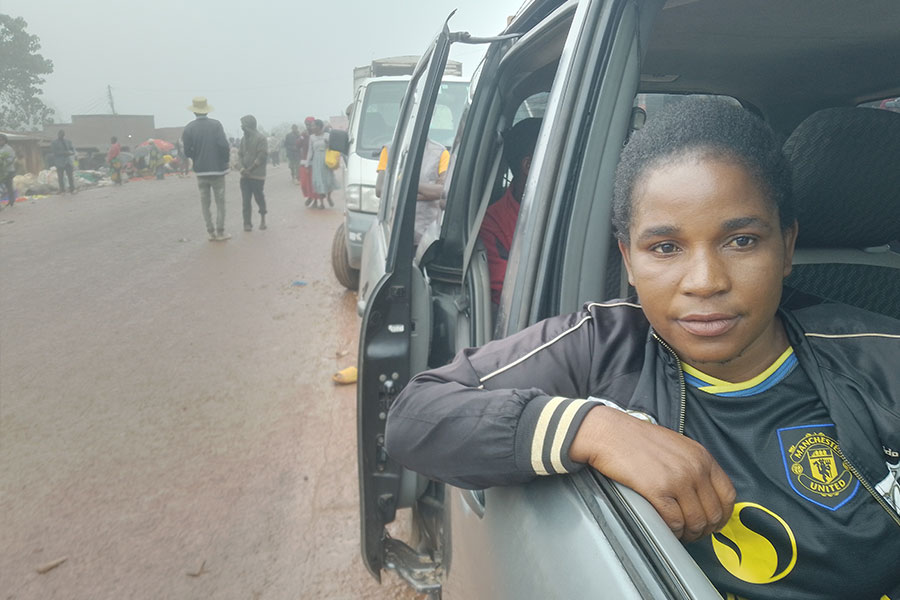
The rain had already begun pounding the tarmac roads of Thyolo on May 22, 2026 when a familiar voice pierced through the commotion at Masambanjati Market Bus Stage.
“Fatima! Fatima! Tikupita kwa Chambuluka ku Fatima!”
Standing beside a black Toyota Sienta, soaked in drizzle but unwavering in spirit, was 37-year-old Bertha Kalidozo, a woman many in Thyolo now simply call “the lady taxi driver.”
With one hand resting on the vehicle door and another waving passengers aboard, Bertha looked every bit in control of her world. Beside her stood a young call boy helping her gather customers before the long journey to Fatima in Nsanje.
To many commuters, she is just another taxi operator fighting for passengers in Malawi’s unforgiving transport business.
But behind the steering wheel lies a story of pain, courage, heartbreak and extraordinary resilience.
A story of a woman who refused to surrender to poverty, abuse and deeply entrenched societal beliefs about what women can or cannot do.
From a hopeless marriage to commanding the roads of Southern Malawi, Bertha is steering more than a taxi. She is steering her own destiny.
Rising From the Ashes
Born and raised in Khuguwe Village under Traditional Authority Mbawera in Thyolo District, Bertha never imagined she would one day become one of the few female taxi drivers operating on the Thyolo-Thekerani-Bangula and Thyolo-Limbe routes.
Before venturing into transport in 2019, she survived through small-scale businesses, trading farm produce and fuel to support her family.
Life was harsh.
Her marriage, she says, became a prison of emotional pain and economic suffering.
“I lived a hopeless life and lacked basic needs,” Bertha recalls quietly. My husband was marrying many wives so it was heavily affecting my life emotionally and financially."
The betrayal and abuse eventually pushed her to make one of the hardest decisions of her life, walking away from the marriage with her three children.
For many women in rural Malawi, separation often marks the beginning of deeper poverty and dependence.
But for Bertha, it became the beginning of liberation.
Using savings and proceeds from her small businesses, she slowly accumulated enough money to buy a Toyota Sienta, a purchase that would completely transform her life.
Yet even after acquiring the vehicle, society still expected her to hand over the steering wheel to a man.
She refused.
“I decided to drive it myself so that I can take care of the car properly, reduce costs and save money that I would have paid a driver and conductor,” she explains.
That decision shocked many.
Even today, male taxi driving remains heavily dominated by men, with women rarely visible in the industry.
But Bertha chose to challenge the norm head-on.
Driving Against Society’s Expectations
Every morning before sunrise, Bertha leaves home to search for customers. Often, she spends hours battling for passengers in Limbe’s crowded transport depots before returning home late at night.
Some days she earns little or nothing. Other days bring insults.
She says some male drivers ridicule her simply because she is a woman in what society still considers a “man’s profession.”
But she has developed thick skin.
“Some male drivers look down on me, but I take their insults as jokes. I mix with them and adapt to life,” she says with a smile.
Her greatest motivation remains her children.
Kalidozo said: “I always make sure my children understand that my absence is for their life and future.”
That determination reflects the reality facing countless Malawian women trapped between economic hardship and societal expectations.
According to a 2026 Oxfam study titled Enhancing Economic Awareness to Empower Decision-Making in Malawi, women entering male-dominated industries such as transport, engineering, IT and vocational trades face severe structural barriers, including hostile working environments, gender-based violence and cultural resistance.
The study found that although women in these industries can earn up to three times more than those in traditionally female-dominated sectors, many still struggle against what researchers describe as “glass ceiling” and “sticky floor” effects.
Women hold only 15.6 percent of management positions in Malawi, while female wage workers continue to face significant pay disparities despite constitutional protections.
For women like Bertha, the road is therefore not only physically demanding—it is socially exhausting.
More Than a Taxi Driver
Bertha’s story carries a message far beyond transport. It is about economic freedom. It is about dignity. And it is about women reclaiming power over their own lives.
“There are many women suffering abuse in families but they continue staying because they have nothing to do,” she says.
She advised: “I would like to encourage fellow women who are not doing anything to wake up and change their lives. Life is hard now. Women need to venture into different businesses like selling tomatoes instead of relying on men for everything.”
She pauses briefly before continuing.
“Some women even own vehicles or motorcycles but say they cannot drive them as taxis or Kabaza. Women need to be visionary and strive to achieve anything in life, even things men can do.”
Those words come from lived experience. Today, Bertha says she no longer dreams of returning to her former abusive husband.
“Currently, I don’t desire to go back to my previous husband because I am self-reliant. I can take care of myself and my children, including paying for their education without problems,” Kalidozo challenged.
A National Struggle for Recognition
Bertha’s determination mirrors broader struggles faced by women across Malawi.
Despite gradual progress in gender inclusion, women remain underrepresented in leadership, technical professions and politics.
Nationally, only Dr. Joyce Banda has managed to break through Malawi’s highest political office as president followed by Justice Dr. Jane Ansah, Vice president. And in the September elections, Dr. Banda was the only female presidential candidate who stood against 16 men.
Nine women appeared as running mates, a seemingly progressive trend that truly reflects the continued reality that in Malawi women are accepted as deputies but not as principal leaders.
In the parliamentary elections, 331 women, 22.4 percent of the total, stood as candidates for election.
In Thyolo District, for example, only three women won parliamentary seats during the September 2025 elections out of nine constituencies, among them Flaviour Kaliati, Maureen Namwali and political veteran Mary Navicha.
At the local assembly level, female councilor candidates fell sharply in the country from 24 percent in 2019 to 17.8 percent 17 percent in 2025.
This decline came despite major investments by civil society and women's rights organizations in candidate training, mentorship, civic education and financial assistance to boost women's competitiveness.
Yet experts say women like Bertha are helping dismantle long-standing stereotypes.
Thyolo District Principal Gender and Community Development Officer Gerald Zgambo has hailed Bertha for doing a good and remarkable thing because the business she is into now is helping her to fend for her children.
"With the example of her, when these women venture into technical business, the fight of gender based violence or abuses will be a thing of the past. Bertha has already shown that it is possible to excel in life as a woman even without a man," he said.
He has a word for all women who look down upon themselves, "the voices that reason you down is not truth, it's just the noise you pick up along the way. It's time to rise up, work, prosper and change the narrative".
He further describes women like Bertha as symbols of courage capable of inspiring future generations to challenge societal limitations.
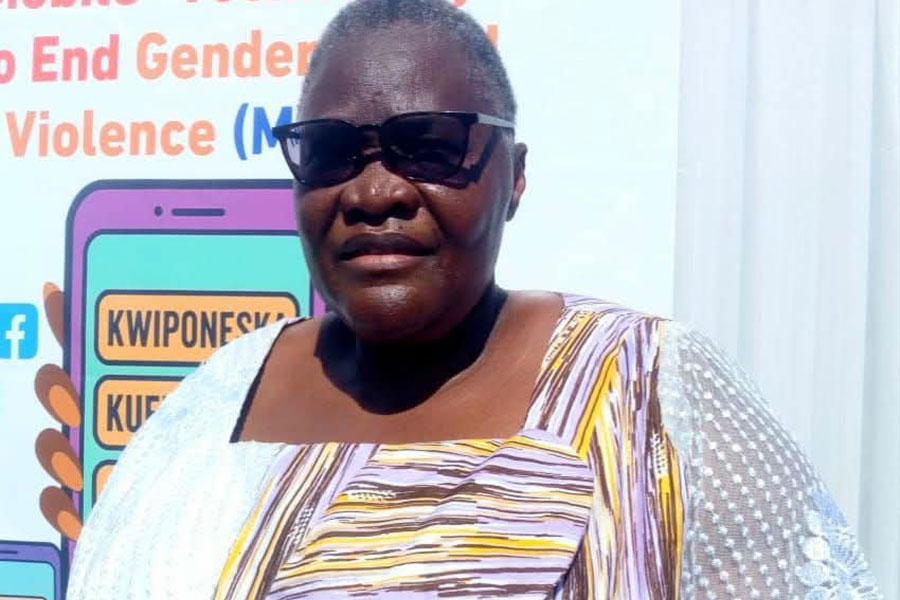
Gender rights advocate, Emma Kaliya says such courageous women are needed who go an extra mile to do things that deemed male-dominated.
"We need such women who are courageous. This is because you sometimes need to do it the entire day and even at night. I have done that before myself I was driving my own bus, I know it's tough work. But that's what we want because men are saying women fear these fields because they are weak," she said.
Kaliya added: "Even in 1988, I was riding a motorbike Yamaha DT 125, but some men were like what is she trying to? So when I see this woman, I am just happy that she decided to come out and do it," she said.
She says such trades are not regulated, they just need someone to be strong, challenge the societal norms and get to work like anybody else. She encouraged more women to join such fields.
The Woman Behind the Wheel
As the rain intensified at Masambanjati that morning, passengers slowly filled Bertha’s Toyota Sienta.
Some climbed aboard without noticing anything unusual.
Others stared in admiration. A few smiled knowingly.
Then, with the confidence of someone who has fought too hard to turn back, Bertha adjusted her mirror, gripped the steering wheel and drove into the steep and winding Thyolo-Thekerani-Bangula road toward Fatima in Nsanje, approximately 180 kilometres distance.
Perhaps unaware that every kilometre she covers is quietly rewriting Malawi’s story about women.
One passenger at a time. One journey at a time. One impossible dream at a time.