


ZODIAK ONLINE
ArtBridge House, Area 47
Sect. 5, P/Bag 312
Lilongwe, Malawi
Sect. 5, P/Bag 312
Lilongwe, Malawi

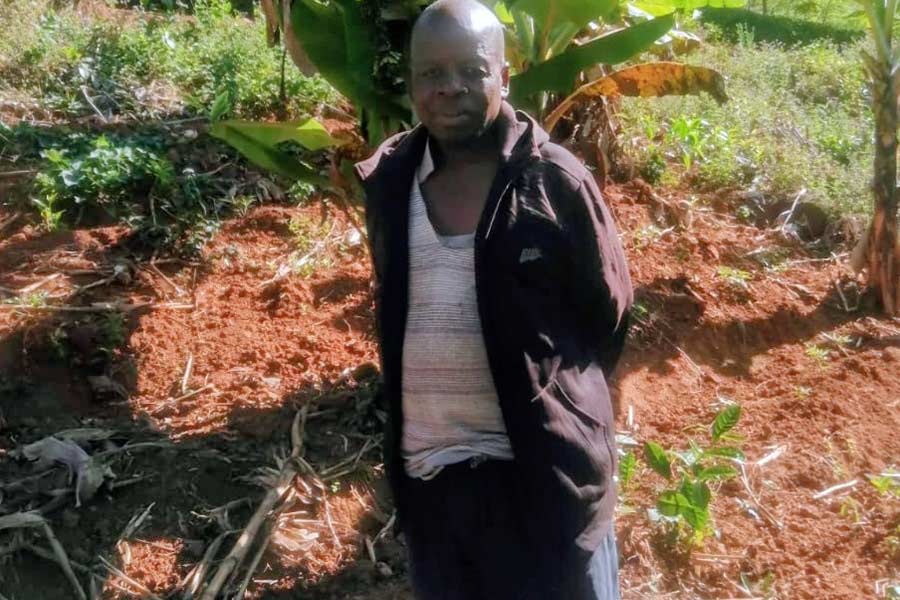
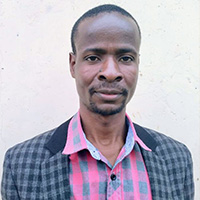
For years, 61-year-old banana farmer Kanjeza Gomiwa believed he was securing his future.
But each time he walked into a bank, he carried more than a withdrawal or deposit slip. He carried a burden that millions of adults across Africa know too well, the inability to read and write.
Every three months, the farmer from Chimeta Village in Senior Chief Mphuka, Thyolo, earns about K2 million from his thriving banana business. Unable to read or write, he trusted employees at one of the banks at the Thyolo boma to help him deposit his sweat. He used to hand over his money, signed where he was told, and left believing his savings were safe.
But one day, when he walked into the bank to access his money, he was met with a shock that would change his life forever.
Officials told him his name could not be found in the system. When he returned later, he was informed that the money had been stolen.
Today, Gomiwa no longer trusts banks. Instead, he keeps his money at home or converts it into assets. Over the years, through the farming he has managed to build three houses at Ntambanyama in the district, and bought two more in Blantyre and several parcels of land. Yet he believes the money he lost could have transformed his life even further.
"What happened at the bank made me lose all interest in keeping money there. I was very confused, but the problem is that I don’t know how to read and write," Gomiwa recalled.
"One day I went to the bank at Thyolo boma to make some deposit and was told my name was missing. They asked me to come back later in the day. When I returned, they told me some woman had stolen the money including mine. I was referred to Blantyre office for assistance, but I was given the same response and sent back. When I returned to the branch, they told me there was nothing they could do because the bank had also been sold and the person who stole the money had been arrested,” he said.
"I gave up and lost a huge amount of money. Every time I made money from my banana business, I was giving it to the bank official to deposit it for me. The bank attendants filled in the deposit slips for me and I only signed. I did not know how much money was in the account, but I deposited money regularly for about two years.
"To me, banks are no longer reliable. Looking at how hard I worked, my life would have changed tremendously if I had not lost that money. I do not dream of keeping money in a bank again," he stressed.
His story gives a picture of how illiteracy is not merely an educational challenge. It is a development issue that affects financial security, dignity, independence and participation in a rapidly digitising economy.
In Malawi, where mobile money services, digital banking platforms and village savings groups are becoming increasingly important, the ability to read and write is no longer just a classroom skill. It is a survival skill.
The consequences of illiteracy are evident in the experiences of other Thyolo residents.
On June 9, 2026, a woman in her 50s from Ironi Village, Senior Chief Nchiramwera, Mary Kholowa recounted how she nearly lost K20,000 after withdrawing K70,000 from a teller at one of the banks at Thyolo boma.
Kholowa said she later received a phone call from the teller claiming that she had mistakenly given her K20,000 extra and demanded that she return the money.
"I was surprised, so I went there the following morning to understand what she meant. The teller insisted that she had made a mistake and told me to withdraw K20,000 from my account and give it to her, which I did. But I later realised this was theft and angrily told her that I would come back," she said.
Adamant, Kholowa returned to the bank accompanied by a security guard who had witnessed her filling out the withdrawal slip.
"I went there again that afternoon with the bank's guard who had seen me complete the withdrawal slip. He testified that I had indeed withdrawn K70,000. Following that, the teller was forced to give me back my K20,000 after I produced my first withdrawal slip as proof. This teller thinks we are all illiterate," she said.
As she narrated her ordeal, Violet Mkoloma, another customer, joined the conversation.
Mkoloma, a single mother, 70, from Mpiyama Village under Senior Chief Nchiramwera, alleged that in May this year, the same bank teller had once shortchanged her by K130,000 from a K1 million withdrawal.
She said she only recovered the money after raising the alarm and demanding a recount. A senior bank official intervened and vindicated her claim.
"I noticed that the money was less because I counted it right there at the bank. I can read and write. I angrily told the teller that she should stop treating everyone as illiterate. It is important for everyone to cross-check withdrawn money before leaving the bank to avoid such theft," she said.
The two women believe many illiterate customers may be losing money without ever realising it.
Their experiences reveal a painful reality. Illiteracy often creates a power imbalance between service providers and customers. Those unable to read slips, verify figures or understand financial documents become easy targets for exploitation.
The challenge is particularly significant in the district.
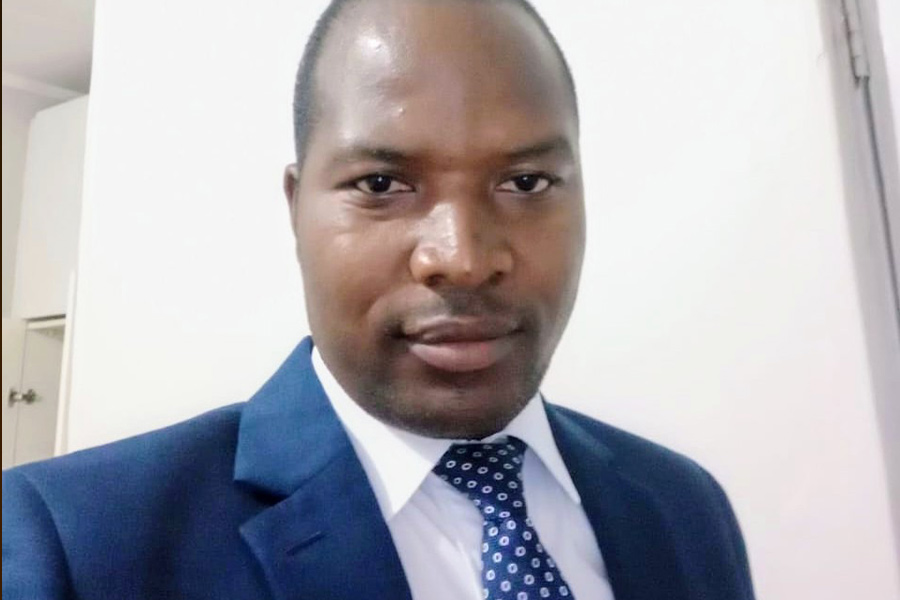
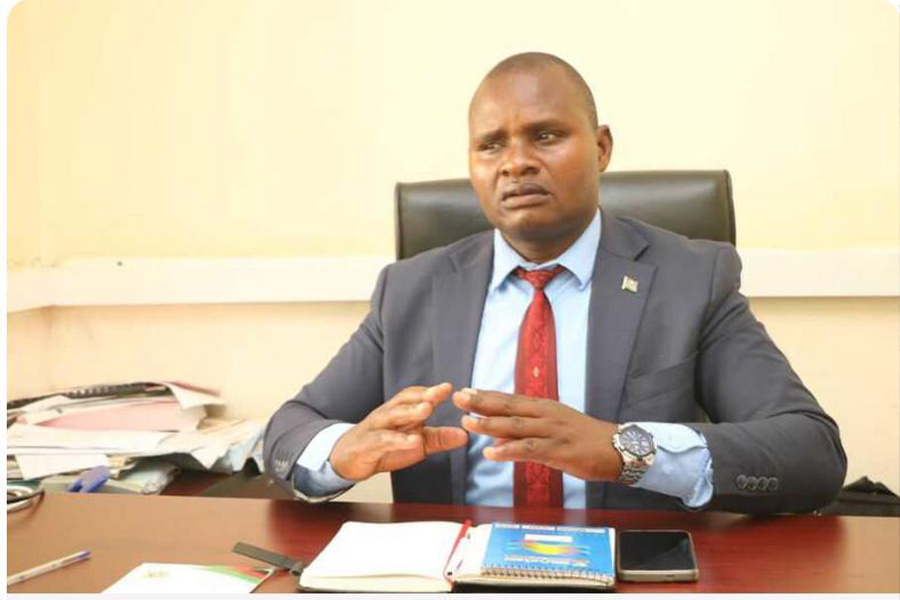
According to Thyolo Principal Community Development Officer Madalitso Nowa, the district has 281 registered Adult Literacy and Education centres, with 2,913 learners enrolled — 2,685 females and 228 males.
Notably, over 33 percent of the district's population of over 770,857 people (NSO 2018) from 27 Traditional Authorities has never attended school, one of the highest proportions in Malawi alongside Salima and Mangochi.
Nowa says the sector is struggling with basic challenges.
"As a council, we are facing a big challenge in Adult Literacy and Education due to a lack of teaching and learning resources. Another challenge is poor monitoring of ALE centres because of inadequate financial resources. Even the K30,000 honorarium is not motivating enough for instructors," Nowa stated.
To address the gaps, Nowa recommends the provision of teaching and learning materials, financial support to strengthen implementation and increased awareness among community members on adult literacy.
He has also suggested curriculum reforms.
"We need to review the ALE curriculum to include emerging issues such as digital literacy and financial literacy. The current curriculum is very old. Fixing this will greatly contribute to the MW2063 Agenda on human capital development and mindset change. It will have a tremendous impact on the level and type of literacy we want," he said.
The situation in Thyolo mirrors a broader national challenge.
Although Malawi has made significant progress in expanding access to education, adult literacy remains a concern.
In 2022, the National Statistical Office (NSO) put Malawi's adult literacy rate at 68.6 percent. Simply put, about 31 out of every 100 adults cannot read or write. This marks gradual progress compared to UNESCO Institute for Statistics figures of 64 percent in 2005 and 65 percent in 2016.
The gap remains wider for women. NSO's 2018 report shows that 34.1 percent of females are illiterate, compared to 28.4 percent of males.
Behind those statistics are real people like Gomiwa, whose ability to manage money, access services and protect themselves from fraud is directly linked to literacy levels. He is one of more than five million Malawians who cannot read or write, out of a projected population of 22 million.
Adult literacy programmes are therefore doing far more than teaching people to read and write. They are restoring confidence, reducing vulnerability and strengthening financial inclusion.
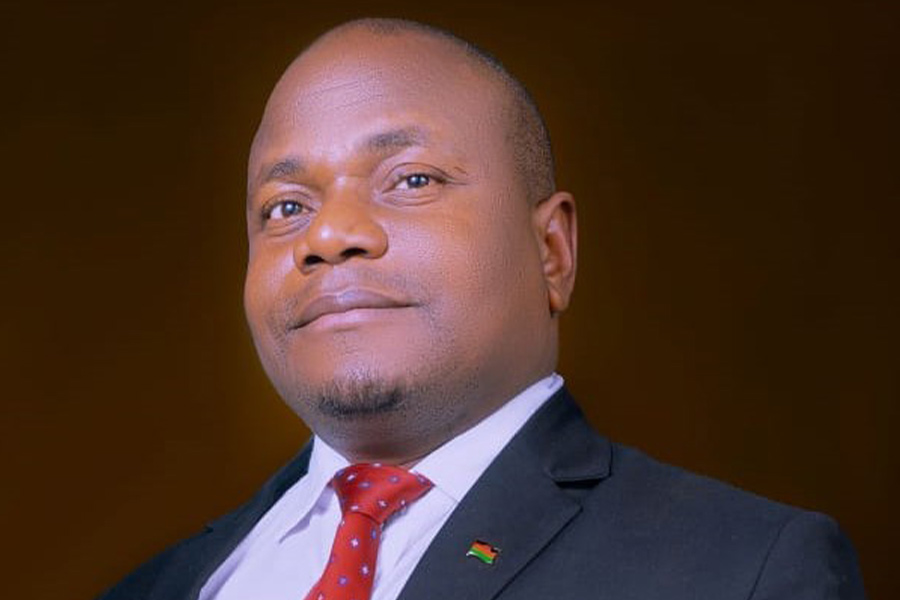
Spokesperson for DVV International for Southern Africa, Dyson Mthawanji, says literacy is key to community development and is urging adult literacy stakeholders in Thyolo to act to ensure more people access Functional Adult Learning and Education.
According to Mthawanji, one of the main barriers in the past has been "mere shyness". However, he notes that there is now positive progress.
"The good news is that the majority of illiterate adults are turning up for adult education classes. This positive move is a result of introducing Integrated Adult Education, in which participants engage in other life skills apart from basic literacy and numeracy," he said.
He added that the integrated approach teaches practical skills alongside reading and writing, including modern agricultural technologies, environmental management, health and hygiene, and conflict resolution, making learning more relevant to daily life.
In the 2026/2027 national budget, Finance Minister Joseph Mwanamveka said that the government allocated K500 million for adult learning and education, which is an increase from K113 million but remains far below the K1.5 billion required to fully fund the National Adult Literacy and Education Strategic Plan. The total budget over a five-year period (2022–2027) estimates K58.3 billion for national instructors' honoraria. However, the actual annual allocation frequently falls short of expectations.
For people like Gomiwa, learning to read and write would mean one day walking into a bank without asking for help, filling in his own deposit or withdrawal slip and keeping his PIN secret.
It means knowing exactly how much money is in his account.
It means protecting the fruits of his labour.
It means independence.
And in a country where millions of adults still struggle with basic literacy, that independence could be one of the most powerful tools for reducing poverty and protecting citizens from exploitation.
As Malawi pursues inclusive development, the stories from Thyolo offer a simple but profound lesson: literacy is not just about letters and numbers. It is about power, protection and the freedom to participate fully in society.